The 25 Most Expensive Cities to Live in the US
From metro areas on both coasts to the middle of the Pacific Ocean, these are the most expensive cities to live in the U.S.


The most expensive cities in the U.S. are usually costly for a good reason — several, really. Residents are willing to pay extra for everything from housing to food to gas if it allows them to live in a place with a wealth of employment opportunities or great weather. Others are looking for cosmopolitan living, with a host of restaurants, museums and other cultural options on tap. Many of these expensive cities appear in our ranking of the most expensive housing markets in the U.S.
However, in some cases, simple isolation plays a leading role in high prices. When pretty much everything has to be imported over long supply lines, prices are bound to be higher.
Additionally, the country continues to absorb the effects of the worst inflationary period in 40 years. This macro environment has made the nation's most expensive cities to live in even pricier than in recent years.
From just $107.88 $24.99 for Kiplinger Personal Finance
Become a smarter, better informed investor. Subscribe from just $107.88 $24.99, plus get up to 4 Special Issues

Sign up for Kiplinger’s Free Newsletters
Profit and prosper with the best of expert advice on investing, taxes, retirement, personal finance and more - straight to your e-mail.
Profit and prosper with the best of expert advice - straight to your e-mail.
And yet, surprisingly, there's something of a silver lining to these metro areas' fast-rising prices. As counterintuitive as it may seem, recent research by New York University economist Edward Wolff shows that "inflation has been a great boon to middle-class U.S. households’ balance sheets, and has therefore helped to mitigate the increase in overall wealth inequality."
Something tells us that city dwellers coping with the daily reality of relentlessly rising costs probably take little solace in such long-term, macro-level developments. But, hey, at least something good might come out of their increasingly stretched budgets.
But back to the data. To determine just how much the most expensive cities to live in the U.S. really cost, we turned to the latest data from the Council for Community and Economic Research.
Its cost-of-living index collects prices across 250 urban areas, covering housing, groceries, utilities, transportation, healthcare, and miscellaneous goods and services (such as buying a cup of coffee or attending a movie).
We also gathered data on household incomes, home prices and unemployment rates for each city to provide context for local living costs.
Take a closer look at the 25 most expensive cities to live in the U.S.
25. Bozeman, Montana

Cost of living: |
22.2% above U.S. average |
Population: |
56,114 |
Median household income: |
$85,747 (U.S. average: $83,592) |
Median home value: |
$687,900 |
Average home price: |
$899,112 (U.S. average: $540,600) |
Unemployment rate: |
2.7% (U.S. average: 4.2%) |
Bozeman sits in the heart of the Gallatin Valley, surrounded by four prominent mountain ranges: the Gallatin, Bridger, Tobacco Root, and Big Belt mountains. Originally a key stop on the Bozeman Trail for gold seekers and settlers in the 1860s, it has transformed into a high-tech and academic hub.
The main driver of costs for Bozeman residents is the same as in most of America: housing. Groceries (3.5%), transportation (8.3%), and utilities (16%↓) are the easiest on people's budgets. Housing (53.0%↑), health care (5.5%), and miscellaneous goods and services (23.0%) are the biggest line items for a Bozeman household budget. The median income of $85,747 is higher than three of the top 10 cities: Brooklyn, Queens and Los Angeles.
Major employers include Montana State University and a growing cluster of photonics and software companies, such as Oracle. The city is a premier gateway to Yellowstone National Park, offering unparalleled access to fly fishing on the Gallatin River and skiing at Big Sky Resort or the Bridger Bowl ski area, making it a focal point for the "mountain-lifestyle" economy.
24. Bellingham, Washington

Cost of living: |
22.5% above U.S. average |
Population: |
95,880 |
Median household income: |
$74,220 |
Median home value: |
$692,600 |
Average home price: |
$753,000 |
Unemployment rate: |
4.1% |
Nestled between the San Juan Islands and the North Cascades, Bellingham is the northernmost city in the contiguous U.S. with a population over 50,000. It was formed by the 1903 consolidation of four smaller towns and historically thrived on coal mining and timber.
Today, Western Washington University and PeaceHealth St. Joseph Medical Center serve as the primary employers.
While living in Bellingham costs roughly 22.5% more than the national average, it remains considerably more affordable than Seattle (10), the other Washington State entry on this list. Home prices in Bellingham are nearly $500,000 lower, while the median income is also about $44,000 less. Residents also pay a smaller premium for groceries (9.7%), utilities (3.0%), and healthcare (9.1%) than those in most other costly cities.
Recreationally, the city is a haven for mountain bikers and hikers at Galbraith Mountain, while the historic Fairhaven District offers a Victorian-style waterfront experience filled with independent bookstores, galleries, and craft breweries.
23. Fairbanks, Alaska

Cost of living: |
23.3% above U.S. average |
Population: |
32,083 |
Median household income: |
$73,534 |
Median home value: |
$268,400 |
Average home price: |
$551,510 |
Unemployment rate: |
3.8% |
Known as the "Golden Heart of Alaska," Fairbanks is situated in the Tanana Valley in the state’s interior. It was established as a trading post during the 1901 gold rush and later became a vital logistics point for the construction of the Alaska Pipeline.
Fairbanks has by far the most expensive utilities of all 250 urban areas surveyed by C2ER. Utilities cost a whopping 100.4% more than what folks pay on the U.S. mainland. They cost 32.7% more than the most expensive city on the mainland for utilities, Bakersfield, California, where costs are 67.3% above the norm.
Fairbanks has the cheapest housing costs of any city on the list. The cost of a home is over $2.35 million lower than the most expensive city on this index, Manhattan.
Despite the extreme climate, recreation is vibrant; the city is a world-renowned destination for viewing the Aurora Borealis and hosting the World Ice Art Championships. In the summer, the Chena Hot Springs Resort offers a unique geothermal experience amid the rugged wilderness.
22. Upland, California

Cost of living: |
23.4% above U.S. average |
Population: |
79,685 |
Median household income: |
$105,366 |
Median home value: |
$802,100 |
Average home price: |
$767,170 |
Unemployment rate: |
5.3% |
Originally established as an agricultural community called "North Ontario" before incorporating in 1906, Upland developed along the historic Old Spanish Trail and Route 66 at the base of the San Gabriel Mountains. Geographically, it sits in the foothill region of the Inland Empire at an elevation of over 1,200 feet, directly on the border between Los Angeles and San Bernardino counties, positioned roughly 35 miles east of downtown Los Angeles.
Upland may be geographically close to L.A., but its housing costs are worlds away. The premium on renting or owning in Los Angeles is 129.4%; costs in Upland exceed the national average by a more manageable 37.2%. Transportation costs are more in line at 35.1% above what most Americans pay; health care (6.5%) and groceries (4.1%) are closer to the national average.
Once famous for its vast citrus groves and stone fruit orchards, Upland has evolved into a residential and commercial center supported by healthcare, education, and regional retail. Key local employers include San Antonio Regional Hospital, the Upland Unified School District, local municipal operations, and a diverse mix of light manufacturing and professional services throughout the Inland Empire corridor.
The city’s culture leans heavily on its heritage and historic charm, anchored by the iconic tree-lined Euclid Avenue — a broad boulevard featuring a historic mule-car trail — and Historic Downtown Upland, which hosts community events such as the annual Upland Lemon Festival. Outdoor enthusiasts frequent the nearby trails of San Antonio Canyon and Mount Baldy, while urban skaters celebrate Upland's legacy as a birthplace of modern skateboard culture.
21. Alexandria, Virginia

Cost of living: |
23.8% above U.S. average |
Population: |
159,102 |
Median household income: |
$124,593 |
Median home value: |
$704,200 |
Average home price: |
$922,894 |
Unemployment rate: |
3.1% |
Washington, D.C., and its close-in suburbs such as Alexandria are magnets for the highly educated seeking high-powered jobs. Naturally, many of those ambitious folks are highly paid, and the region's prices reflect that.
The average home price in Alexandria is $922,894, almost twice the price of the typical American dwelling. Overall housing costs are 61.4% higher than the U.S. mean, driven partly by average apartment rents of $2,507 a month (vs. $1,636 nationally), and average principal and interest payments on mortgages of $4,118 a month (vs. the national average of $2,498).
Happily for locals, somewhat more reasonable prices for transportation (3.2%), groceries (14.6%) and health care (13.2%) make the total cost of living in Alexandria slightly higher than the U.S. average. Utilities offer some savings with prices 2.6% below average.
20. Fort Lauderdale, Florida

Cost of living: |
25.3% above U.S. average |
Population: |
190,640 |
Median household income: |
$90,734 |
Median home value: |
$579,300 |
Average home price: |
$951,996 |
Unemployment rate: |
4.6% |
Named after a series of forts built during the Second Seminole War and incorporated in 1911, Fort Lauderdale grew from a modest agricultural outpost into a bustling resort destination after Henry Flagler’s Florida East Coast Railway arrived in 1896. Located on Florida's Atlantic coast about 30 miles north of Miami, the city is famous for an intricate network of over 300 miles of inland waterways that earn it the nickname the "Venice of America."
Beyond its traditional roots in tourism and hospitality, modern Fort Lauderdale is a major international trade and marine industry hub. Its economy is heavily driven by marine manufacturing, yachting services, Port Everglades (a major cruise and cargo port), Broward Health, and a growing sector of technology, finance, and real estate firms.
Fort Lauderdale is the only city in Florida to make the list. Although it ranks as the 20th most expensive city overall, housing costs are the 16th highest in the nation, running 73% above the national average. Utility and healthcare expenses offer slight savings, coming in at 1.1% and 0.5% below average, respectively. At 25.3 minutes, Fort Lauderdale’s average commute is roughly five minutes faster than that of other communities in the metro area.
Cultural life centers on historic Las Olas Boulevard — a bustling corridor of dining, galleries, and boutiques — alongside the Riverwalk Arts & Entertainment District, home to the Broward Center for the Performing Arts and the NSU Art Museum. Outdoor recreation revolves around the water, from the city's famous white sand beaches and deep-sea fishing charters to kayaking through Hugh Taylor Birch State Park.
Florida remains a tax-friendly state with no personal income tax on wages, retirement income, or capital gains, alongside a 6% statewide sales tax. It also levies no estate or inheritance taxes. However, high property taxes and home insurance rates can partially offset those income tax savings.
19. Everett, Washington

Cost of living: |
27.3% above U.S. average |
Population: |
112,999 |
Median household income: |
$80,960 |
Median home value: |
$598,900 |
Average home price: |
$912,186 |
Unemployment rate: |
5.0 % |
Founded in 1890 during an industrial real estate boom and named after the son of investor Charles L. Colby, Everett grew rapidly into a major timber and shingle milling hub at the terminus of the Great Northern Railway. Geographically, it occupies a scenic peninsula on Puget Sound’s Port Gardner Bay, bordered by the Snohomish River to the east and framed by the dramatic peaks of the Cascade Mountains roughly 25 miles north of Seattle
The local economy transitioned from timber to high-tech manufacturing after World War II, accelerated by Boeing's construction of its massive aircraft assembly plant at Paine Field in 1967. Today, Boeing remains the anchor employer alongside a robust aerospace supply chain, Naval Station Everett, the Port of Everett, and regional healthcare powerhouses like Providence Regional Medical Center.
While the cost of living in Everett is 27% above the national average, it remains 19.5% cheaper than neighboring Seattle. Housing is also comparatively affordable, running 48.6% above the national average. However, transportation and utilities are pricey, coming in at 20% and 44.9 % higher than what most Americans pay in their communities.
Everett’s waterfront offers a vibrant mix of working port activity and public recreation, featuring one of the largest public marinas on the West Coast, a summer ferry to sandy Jetty Island, and a revitalized waterfront district. Culturally, residents enjoy minor league hockey at the Angel of the Winds Arena, minor league baseball at Funko Field, visual exhibits at the Schack Art Center, and quick access to hiking and skiing in the nearby Cascades.
Although Washington is one of nine states with no traditional state income tax for most residents, the state does levy a 9.9% tax on personal income above $1 million (that will take effect in 2027).
18. Anchorage, Alaska

Cost of living: |
27.9% above U.S. average |
Population: |
289,600 |
Median household income: |
$105,356 |
Median home value: |
$429,600 |
Average home price: |
$794,947 |
Unemployment rate: |
3.8% |
Anchorage is positioned on a peninsula at the head of Cook Inlet, framed by the dramatic Chugach Mountains. While it wasn't founded until 1914, as a railroad construction port, it played a critical role in the 20th-century development of the Alaskan frontier.
The energy sector supports the economy — with BP and ConocoPhillips maintaining a large presence — as well as the Joint Base Elmendorf-Richardson military installation.
Those living in Anchorage (11.9%) pay a smaller premium for utilities than people living in Juneau (34.1%) or Fairbanks (100.4%). However, they pay more for healthcare, with costs that exceed the national average by 30.9%.
As we move down the list, housing becomes much cheaper. The average rent in Anchorage is $1,816; that's only $180 more than the national average of $1,636. Mortgages carry a larger premium than rents. At $3,818, mortgage payments are 53% more than the norm of $2,498.
For entertainment, the Tony Knowles Coastal Trail offers 11 miles of scenic biking and walking with views of Denali on clear days, while the Alaska Native Heritage Center provides a deep cultural dive into the state's indigenous history.
The tax landscape in Alaska is as unique as the state's geography. For starters, there is no state income tax, and full-year residents actually receive a yearly payout from the Permanent Fund Dividend. This payment is taxed at the federal level.
17. Oakland, California

Cost of living: |
31.8% above U.S. average |
Population: |
443,575 |
Median household income: |
$102,235 |
Median home value: |
$884,000 |
Average home price: |
$823,016 |
Unemployment rate: |
4.5% |
Next to Berkeley and within commuting distance to San Francisco, Oakland needs neither of them to entice foodies, culture seekers and nature lovers. Oakland enjoys a warm-summer Mediterranean climate with an average of 260 sunny days per year.
Alameda County is one of the most appealing of the Bay Area's nine counties. Oakland has more than 50 distinct neighborhoods, ranging from Temescal to tony Rockridge to the Oakland Hills. Lake Merritt attracts picnickers, boaters and birders; it is the oldest wildlife refuge in America and is considered to be the jewel of Oakland. All of this beauty comes at a steep cost. Oaklandites pay 51.8% more for housing-related expenses, including rents and mortgages, than most Americans. Their mortgage principal plus interest payments are $3,675, $1,177 more than the national average of $2,498.
A major West Coast port city, the Port of Oakland is the busiest in Northern California and one of the busiest in the United States.
Bay Area Rapid Transit (BART) doesn’t operate 24/7 like New York City’s subway, but BART efficiently connects the East Bay to points farther east, Daly City, the South Bay and beyond. Despite robust public transportation options, transportation costs for Oakland residents are still 37.7% above the national average.
Kiplinger has ranked California one of the worst states to retire in when it comes to taxes. Some retirees might pay an income tax rate as high as 13.3% if they are still working. It also added a 1.1% payroll tax for employees making more than $1 million.
16. Stamford, Connecticut

Cost of living: |
33.9% above U.S. average |
Population: |
139,112 |
Median household income: |
$117,627 |
Median home value: |
$671,000 |
Average home price: |
$913,790 |
Unemployment rate: |
4.3% |
Situated on the Long Island Sound in Fairfield County, Stamford serves as a vital coastal link between New Haven and New York City. Historically, it evolved from an 1800s manufacturing center into a premier corporate hub, often referred to as "the city that works."
The employer base is anchored by the financial services and media sectors, hosting the headquarters of WWE, Charter Communications, and Synchrony Financial. The former massive UBS trading floor, which holds a Guinness World Record, was sold in 2017 and was redeveloped as an office tower.
Living in Stamford is more affordable than most of the cities on this list. Groceries and transportation exceed the national average by only 10.6% and 9.6%, respectively. The average home price is $913,790, and apartment living is $3,300. Housing and utilities are where the costs start to climb. Residents pay 75.6% more for apartments, condos and homes than the national average, while utility prices are 30.6% higher.
For recreation, residents frequent the 91-acre Cove Island Park, known for its beaches and high-end marinas, while the downtown offers a sophisticated entertainment scene with the Palace Theatre and a dense collection of upscale dining along Bedford Street.
15. Washington, D.C.

Cost of living: |
34.3% above U.S. average |
Row 0 - Cell 2 |
Population: |
702,250 |
Row 1 - Cell 2 |
Median household income: |
$109,707 |
Row 2 - Cell 2 |
Median home value: |
$733,400 |
Row 3 - Cell 2 |
Average home price: |
$1,029,227 |
Row 4 - Cell 2 |
Unemployment rate: |
6.1% |
Row 5 - Cell 2 |
When it comes to living costs, the nation's capital is a tale of two cities. Housing-related expenses, including rents and mortgages, are by far the most burdensome at almost twice the national average, according to C2ER, but other expenses aren't too bad.
Groceries run about 9.2% above the national average, while utilities are about 18.7% more expensive. Miscellaneous goods and services are 12.4% pricier than the national average. Happily, transportation expenses aren't overly onerous, at 5.8% less than the U.S. average. A wide-ranging bus and metro system makes getting to and around the District of Columbia affordable.
And, of course, numerous museums and historical sites are free to visit, too.
Be that as it may, the average price of a home in D.C. stands at $1,029,227. Meanwhile, the average apartment rents for $3,177 a month — or $1,538 a month more than the U.S. average.
14. Juneau, Alaska

Cost of living: |
35.7% above U.S. average |
Population: |
31,794 |
Median household income: |
$101,661 |
Median home value: |
$449,300 |
Average home price: |
$852,000 |
Unemployment rate: |
2.9% |
Located in the Alaska Panhandle at the base of Mount Juneau and across the channel from Douglas Island, Juneau holds the unique distinction of being the only U.S. state capital accessible solely by air or sea.
Historically, the city was founded on a major gold strike in 1880, a legacy still visible in its historic downtown architecture. Today, the economy is driven by government employment and a massive summer tourism industry.
Housing in Juneau is less expensive than in most places on the list, beating only Anchorage, Bellingham, Fairbanks, Upland, and Oakland. Generally, renting or owning in this remote city will cost you 52.2% more than the national average. The city has the 4th-highest health care costs of the 273 U.S. localities on the C2ER list. However, utilities are surprisingly reasonable compared to the rest of Alaska, commanding a 34.1% premium. The markup on groceries (28.9%) isn't as substantial as other costs, although bananas cost 67% more at checkout.
Outside of work, recreation is dominated by the spectacular Mendenhall Glacier, which offers world-class hiking and ice cave exploration, while the Perseverance Trail provides a rugged trek through the area’s mining history.
13. Arlington, Virginia

Cost of living: |
38.7% above U.S. average |
Population: |
239,807 |
Median household income: |
$133,582 |
Median home value: |
$945,700 |
Average home price: |
$1,153,068 |
Unemployment rate: |
3.1% |
Washington, D.C., and its close-in suburbs sport some of the highest living costs in the nation. So it should come as no surprise that Arlington makes the list for one of the most expensive cities to live in.
This suburb, home to the Pentagon and Arlington National Cemetery, sits just across the Potomac River from Washington, D.C. As with its neighbors, Arlington attracts ambitious, well-paid people — and has the home prices to prove it.
Housing-related expenses, including rents and mortgages, are almost twice the national average. Locals can thank an average home price of more than $1.15 million for much of that financial pain. Average principal and interest payments on mortgages top $5,268 a month in Arlington.
On the plus side for residents, Arlington's median household income of nearly $133,582 is among the highest in the U.S. Its per capita income of $91,787 is 80% more than the average of $50,866 in Virginia.
12. Bethesda, Maryland

Cost of living: |
40.1% above U.S. average |
Population: |
71,717 |
Median household income: |
$187,236 |
Median home value: |
$1,247,600 |
Average home price: |
$1,233,083 |
Unemployment rate: |
3.7% |
What goes for Bethesda goes for Arlington, too. Residents pay a premium to live in the upscale D.C. suburb, which is home to the National Institutes of Health, Walter Reed National Military Medical Center and many other prestigious federal government institutions.
As a medical hub, it's perhaps befitting that health care costs run about 8.9% higher than the national average in Bethesda. Other major expense categories aren't too bad, either. Groceries (13.5%) and utilities (7.5% ) are more expensive in this D.C. suburb, and transportation is only 14.2% less expensive.
The biggest line item contributing to Bethesda's high cost of living? Not surprisingly, it's housing. Renters and homeowners pay a 112.6% premium vs. the national average to keep roofs over their heads.
Maryland has both an inheritance tax and an estate tax. The gas tax in Maryland is $0.46 per gallon this year, and is the seventh-highest in the nation.
11. San Diego, California

Cost of living: |
45.9% above U.S. average |
Population: |
1,404,461 |
Median household income: |
$111,032 |
Median home value: |
$980,700 |
Average home price: |
$1,127,611 |
Unemployment rate: |
4.4% |
San Diego, with its miles of beaches and nearly ideal climate, is a paradise for those who love the outdoors. Be it surfing, sailing, hiking, biking, golfing or just exploring Balboa Park, this city on the Pacific has something for everyone.
And for those who prefer more sedentary activities, San Diego offers a world-class zoo, museums, professional sports teams and a wide-ranging restaurant scene. You can also spend the night on the USS Midway, the longest-serving aircraft carrier named after the famous battle in World War II.
What's not to like?
Well, for one thing, San Diego has one of the most expensive housing markets in the U.S. At more than $1.13 million, the average home price is 101.2% greater than the national average.
Or consider it this way: San Diego's median home value is $980,700, or 81.4% higher than the U.S. median of $540,600. The city's median household income, however, is only one-third greater than the U.S. level. Renters feel the pinch, too, with the average apartment going for $2,716 a month vs the national average of $1,636.
10. Seattle, Washington

Cost of living: |
46.8% above U.S. average |
Population: |
780,992 |
Median household income: |
$118,745 |
Median home value: |
$950,800 |
Average home price: |
$1,252,825 |
Unemployment rate: |
4.9% |
Seattle, Washington, is a major Pacific Northwest city known for its stunning natural setting, economic innovation and vibrant cultural scene. Seattle is uniquely situated on an isthmus between the salt waters of Puget Sound to the west and the freshwater of Lake Washington to the east. And, on clear days, Mount Rainier dominates the skyline.
The region is a hotbed for software, e-commerce, and cloud computing. Today, the city is home to the headquarters of Amazon and a significant presence for companies like Microsoft (headquartered in nearby Redmond), Google and Meta.
Those tech jobs pay well, giving residents an average income of $118,745, which is $35,153 above the national average paycheck. This salary has to go far, as the average home in Seattle costs more than $1.25 million, and the general cost of living is 46.8% higher than average. Utilities run a meager 1.6% below what most people pay. However, that is still well below what their neighbors in California and Alaska are paying.
Home to Starbucks, the city is the birthplace of national coffee culture. While Boeing moved its headquarters to Chicago, it still maintains a massive manufacturing presence in the Seattle area.
Washington state is one of nine states with no state income tax for most people. Washington has approved a 9.9% tax on personal income above $1 million that will take effect in 2027. While retirement income, such as pensions, 401(k) and IRA distributions and Social Security payments, isn't taxed, capital gains are taxed at a 7% rate. Only the portion of gains above the threshold ($250,000) is subject to the tax, and some assets are exempt.
9. Boston, Massachusetts

Cost of living: |
47.8% above U.S. average |
Population: |
673,822 |
Median household income: |
$97,791 |
Median home value: |
$722,800 |
Average home price: |
$1,087,349 |
Unemployment rate: |
4.2% |
With its unparalleled collection of universities, hospitals, historical sites and tech and biotech employers, it's easy to see why Boston is such an appealing place to live. And while there's no question the city's popularity comes at a high cost, it's not nearly as high as some East Coast cities that are often mentioned in the same breath as Boston.
Boston has a high concentration of students, recent grads and young professionals, and they require some level of affordability to get by while they're starting out. Utilities, for example, are "only" 43.9% more expensive than the national average. Healthcare costs 31.8% more than what the typical American pays, and miscellaneous goods and services are 18.3% more expensive.
Housing-related costs, however, are a killer, or 117.5% higher than the national average. Renters and homeowners pay more than twice the national average for their domiciles. For example, the average apartment rents for $4,317 a month in Boston. That compares with a national average of $1,636 a month, according to C2ER. The average price of a Boston home is $1,087,349 vs $540,600 nationally.
In another blow to residents' wallets, Massachusetts isn't particularly tax-friendly. It's rated one of the Worst States to Retire in if You Hate Paying Taxes and one of the 10 Least Tax-Friendly States for Middle-Class Families by the Kiplinger tax experts.
8. Los Angeles, California

Cost of living: |
52.1% above U.S. average |
Population: |
3,878,718 |
Median household income: |
$82,263 |
Median home value: |
$947,900 |
Average home price: |
$1,333,009 |
Unemployment rate: |
5.3% |
Few cities can top Los Angeles for excess and glamor, but most of its residents don't work in Hollywood or shop on Rodeo Drive. While high living costs make L.A. one of the most expensive cities to live in the U.S., median annual incomes are $1,329 below the national level.
And yet the allure of the nation's second-largest city remains strong. From Hollywood to Beverly Hills to Venice Beach, few cities can claim as many famous locales. For those who seek culture beyond the Kardashians, L.A. boasts several important museums and the world-class Los Angeles Philharmonic.
Just be forewarned that L.A.'s notorious traffic helps push transportation costs 43.0% above the national average. And although groceries, utilities, and miscellaneous goods and services are only about 11.1% to 18.8% costlier than the U.S. average, housing bleeds residents dry. Also, Angelenos get a break on healthcare costs: they're only 11.1% above the national average.
Indeed, housing-related expenses, including rents and mortgages, run 135.3% above the national average in Los Angeles. For example, the average price of a home in L.A. is almost $1.33 million, vs the national average of $540,600. Average rent ($3,042), meanwhile, is almost twice as much as the U.S. average.
Lastly, there's another thing that's unhelpfully elevated in the City of Angels. While the U.S. unemployment rate is 4.2%, Los Angeles' rate stands at 5.3%.
7. Queens, New York

Cost of living: |
55.3% above U.S. average |
Population: |
2,316,841 |
Median household income: |
$85,273 |
Median home value: |
$720,300 |
Average home price: |
$1.532,716 |
Unemployment rate: |
4.7% |
Queens is one of the most ethnically diverse urban areas in the world. In fact, it holds the Guinness World Record for “most ethnically diverse urban area on the planet.” It's also the most linguistically diverse, with at least 138 languages spoken throughout the borough. But the cost of living in this borough is especially high — 55% more than the rest of the country.
Housing in Queens is marginally cheaper than in neighboring boroughs Manhattan and Brooklyn, but remains elevated. Overall, prices are 164% over the national average. The average home sells for over $1.5 million, and average rent is $3,613 a month; both expenses are more than double what most people pay.
Queens is also the home of the Mets and the US Open tennis tournament, and the former home of the New York World's Fair in 1964, now Flushing Meadows-Corona Park. The first incarnation of It's a Small World, which debuted at the 1964 World's Fair, was an afterthought and nearly did not happen.
The median household income in Queens is $85,273, only $3,669 above the national average. That is more than the folks in Brooklyn earn and less than what Manhattanites earn.
New York took fourth place on Kiplinger’s Most Expensive States to Live in for Homeowners. Median real estate taxes paid were $6,542, and homeowners age 65 and older may qualify for a property tax exemption or rebate.

6. Orange County, California
Cost of living: |
64.1% above U.S. average |
Population: |
3,170,435 |
Median household income: |
$115,229 |
Median home value: |
$1,037,200 |
Average home price: |
$1,671,040 |
Unemployment rate: |
4.1% |
Orange County, known as The O.C. for short, is synonymous with wealth, so much so that there was an entire TV series made about it in the 2000s.
Several large municipalities make up the county, which abuts Los Angeles to the southeast, including Anaheim, Santa Ana and Irvine. But it's the smaller, tonier enclaves such as Newport Beach (median home value: $2 million) that cement Orange County's reputation for sheltering some of Southern California's richest and most famous.
The average home price for all of Orange County sits at almost $1.67 million, according to C2ER. That makes it the fourth priciest market in the country. However, at $3,101 a month, apartment rents are almost twice the national average.
All in all, housing in the O.C. costs 173.3% more than what the typical American pays. Other budget-stressors include groceries, which cost about 11.5% more than the U.S. average, and transportation, which is 43.4% pricier.
On the brighter side of the ledger, healthcare costs are only 3.6% higher than the national average, and utilities come in above average, costing 20.7% more.

5. San Francisco, California
Cost of living: |
65.6% above U.S. average |
Population: |
827,526 |
Median household income: |
$139,801 |
Median home value: |
$1,314,700 |
Average home price: |
$1,421,487 |
Unemployment rate: |
4.2% |
Years of relentless growth driven by high-paid tech workers have given San Francisco one of the highest costs of living in the country, meaning even those with fat paychecks can struggle to make ends meet.
Houses are famously expensive — a seemingly insurmountable obstacle for aspiring homeowners. The average home price is a staggering $1.4 million in San Francisco, according to C2ER's cost-of-living index, and the median home value is the highest among the 25 most expensive cities to live in the U.S.
Renters don't fare much better. The average rent for an apartment in San Francisco is $4,016 a month. That's almost 2.5 times the national average. Indeed, overall, housing-related costs in San Francisco are almost 2.6 times greater than the national average.
And the nosebleed prices don't stop there. Groceries, utilities, healthcare, and transportation expenses all run anywhere from 19.0% to almost 423.1% more than what the typical American pays. Miscellaneous goods and services are only 23.0% more expensive than the national average.

4. Brooklyn, New York
Cost of living: |
66.8% above U.S. average |
Population: |
2,617,631 |
Median household income: |
$81,027 |
Median home value: |
$912,500 |
Average home price: |
$1,611,508 |
Unemployment rate: |
5.3% |
Technically, Brooklyn is one of the five boroughs that make up New York City, but in the past couple of decades, it has emerged as something of a metropolis unto itself. Indeed, if Brooklyn were an independent city, its population would be on par with Chicago, the third-largest city in the nation.
Prospect Park, a 585-acre urban oasis, opened nine years after Central Park and shared the same landscape architect, Frederick Law Olmsted. Within walking distance are the Brooklyn Botanic Garden and the Brooklyn Museum.
Once upon a time, Brooklyn was considered a viable alternative for those who couldn't afford to live in Manhattan. Not anymore. Housing-related expenses, including rents and mortgages, are almost four times higher than the national average.
And yet, the median household income in Brooklyn of $81,027 is lower than the U.S. median. It's also almost $25,376 lower than the median household income in Manhattan.
Happily, not everything in Brooklyn is eye-wateringly expensive. Utilities costs are only about 6.1% higher than their respective national averages. And transportation expenses run just 10.0% above what the typical American pays. Health care, however, is about 34.0% more expensive than the U.S. average.
Adding to Brooklynites' pocketbook pain: according to the New York State tax guide, New York is one of the least tax-friendly states for both retirees and middle-class families.
3. San Jose, California

Cost of living: |
80.4% above U.S. average |
Population: |
997,395 |
Median household income: |
$148,226 |
Median home value: |
$1,271,200 |
Average home price: |
$1,972,721 |
Unemployment rate: |
4.0% |
San Jose possesses all of the grand natural beauty you might associate with California. The downtown has streets lined with palm trees and you can watch a majestic sunset over Silicon Valley. This all comes at a high price, and that is why it earned the third spot on this list.
The tech roots of this area run deep. IBM established its first West Coast operations in San Jose in 1943 and opened an IBM Research lab in 1952. The hard disk drive was invented there. Today, San Jose is at the epicenter of tech development in America and hosts major facilities for many companies, including Ericsson, Hewlett-Packard Enterprise, Hitachi, IBM, Lockheed Martin, Qualcomm and the North American headquarters of Samsung Semiconductor.
The abundance of high-paying jobs is necessary to live and work in the area. The typical household income in San Jose is $148,226, and that is almost twice the national average of $83,592.
Housing costs are 216.2% higher than the national average, and the mean price of a home is $1,972,721. That is more than 3.6 times the national average of $540,600. The cost of heating and cooling your home, as well as charging your EV, is in line with housing prices and is 34.7% higher than average, although it is cheaper than neighboring San Francisco, where the costs are 41.0% above the norm.
California's state tax guide paints a bleak picture for taxes. California has among the highest taxes in the nation. Sales and income taxes are generally high, but effective property tax rates are below the national average.
Retirees don’t fare much better. California is one of Kiplinger's Worst States to Retire in if You Hate Paying Taxes. Most types of retirement income are taxable in California; retirees might pay an income tax rate as high as 14.4% if they continue to work and their income tops $1,000,000.
2. Honolulu, Hawaii

Cost of living: |
84.8% above U.S. average |
Population: |
344,977 |
Median household income: |
$86,169 |
Median home value: |
$850,100 |
Average home price: |
$1,741,153 |
Unemployment rate: |
3.1% |
To enjoy the perks of living in such a remote Pacific paradise, Honolulu residents pay more than they would on the mainland for pretty much everything — and it's not hard to understand why. Most goods sold in Hawaii must arrive either by boat or plane, which jacks up the price considerably.
Honolulu has the second most expensive utilities of all 265 urban areas surveyed by C2ER. Utilities cost a whopping 83.5% more than what folks pay on the U.S. mainland. They cost 77.4% more than the most expensive city to live on the mainland, Manhattan, where costs are 6.1% above the norm.
Groceries don’t trail far behind. For example, eggs cost 107% above the national average. Getting to the store costs more, too. Overall, transportation costs are 49% more expensive, and locals shell out upwards of 13.1% more for healthcare.
But, as always, housing is the biggest income-eater. Housing-related costs are more than three times the national average in Honolulu. Heck, the average home carries a price of almost $1.75 million.
Residents do catch at least one break when it comes to their finances. The Hawaii state tax guide shows it's among the more tax-friendly states for middle-class families on this list, and is one of the most tax-friendly states for retirees. It also earned a spot on Kiplinger's 10 Most Tax-Friendly States for Retirees.
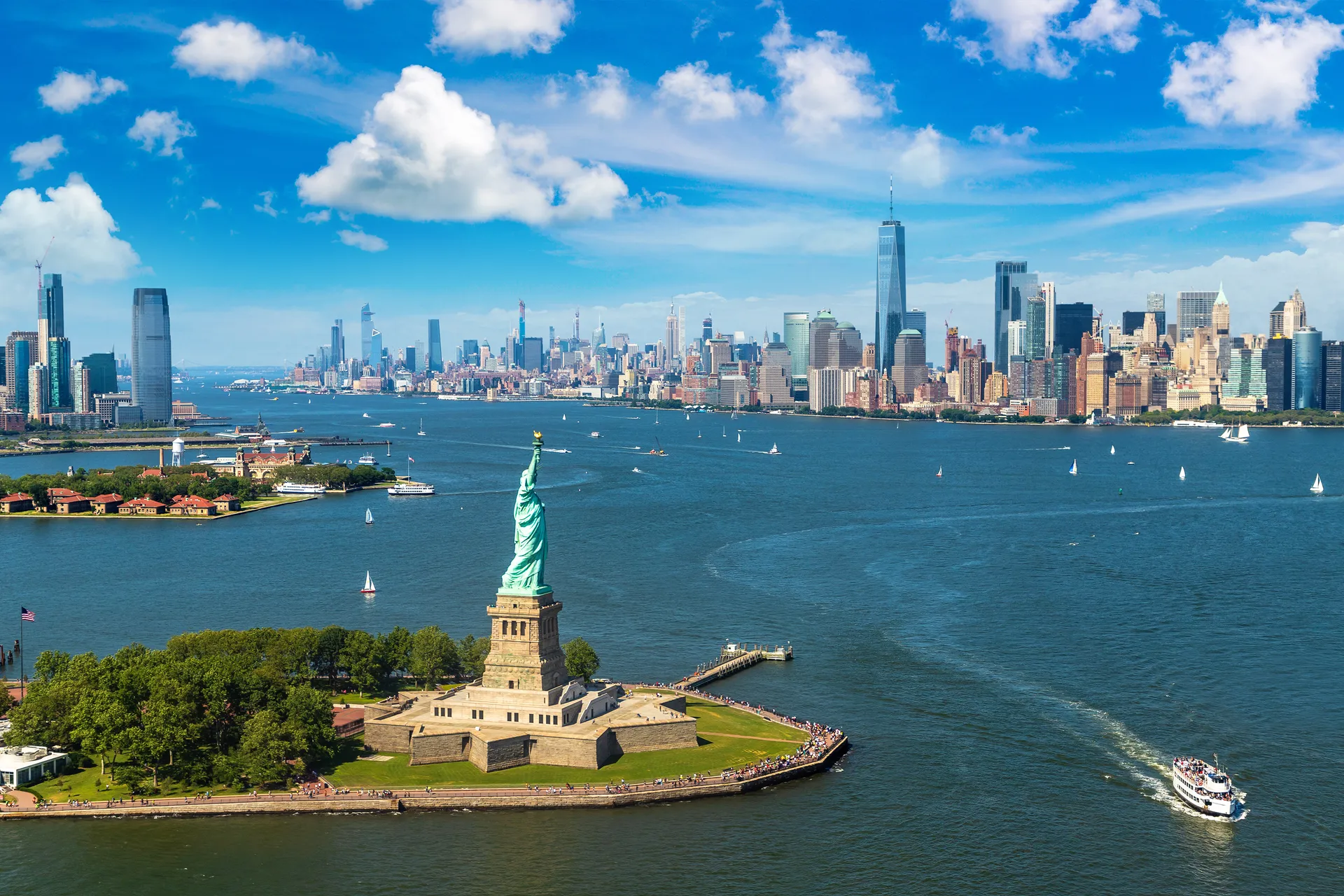
1. Manhattan, New York
Cost of living: |
117.6% above U.S. average |
Population: |
1,660,664 |
Median household income: |
$106,403 |
Median home value: |
$1,105,600 |
Average home price: |
$2,904,444 |
Unemployment rate: |
4.7% |
If you've ever been to Manhattan, you don't need us to tell you that it's an expensive place to visit.
But it's even more expensive to live there.
With space at a premium and location paramount, the median home value in Manhattan is second only to housing prices in the tech hubs of San Jose and San Francisco on our list of most expensive cities to live in the U.S. The average apartment rent is a stunning $5,669 a month, blowing away every other city tracked by C2ER. Meanwhile, the average home price is over $2.9 million.
The budget-busting doesn't stop there. Residents pay a premium of almost 50% for healthcare and 34% more for a doctor's visit. Transportation runs 19.2% above average. Meanwhile, miscellaneous goods and services are 29.2% more expensive. For example, if you want to go to the movies, you'll pay 92% more for a ticket (than the national average) at $25.65. Yoga classes cost 52% more than the national average. All of this and more conspire to make Manhattan the most expensive city in the nation, by a lot.
By the way, you'll need to like crowds if you hope to make it in the Big Apple: Manhattan packs in almost 73,293 residents per square mile, according to the U.S. Census Bureau. For context, San Francisco, which has one of the highest population densities in the U.S., hosts a mere 17,726 residents per square mile.
How we picked the most expensive cities in the U.S.
Source: C2ER's Cost of Living Index, 2026 Annual Average Data, published May 2026. Index data is based on average prices of goods and services collected during the first quarter of 2026, with index values based on the 2024 US Consumer Expenditure Survey. Population data, household incomes, home values, poverty rates and other demographic information are from the U.S. Census Bureau. Local unemployment rates, courtesy of the U.S. Bureau of Labor Statistics and the Federal Reserve Bank of St Louis, are not seasonally adjusted and are as of August 10 2026, for the month of June 2026, which is the latest available final data. Local unemployment rates for New York City, courtesy of New York State Department of Labor Labor Statistics for the New York City Region , local unemployment rate for cities in California courtesy of State of California Employment Development Department, local unemployment rate for Boston, MA courtesy of State of Massachusetts Department of Economic Research and the Alaska Department of Labor and Workforce Development.
Related Content