Warren Buffett: Why Index Funds Trump Hedge Funds
Buffett easily won his 10-year bet against the hedge-fund industry thanks to the cheap efficiency of simple index funds.

You are now subscribed
Your newsletter sign-up was successful
Want to add more newsletters?

Delivered daily
Kiplinger Today
Profit and prosper with the best of Kiplinger's advice on investing, taxes, retirement, personal finance and much more delivered daily. Smart money moves start here.

Sent five days a week
Kiplinger A Step Ahead
Get practical help to make better financial decisions in your everyday life, from spending to savings on top deals.

Delivered daily
Kiplinger Closing Bell
Get today's biggest financial and investing headlines delivered to your inbox every day the U.S. stock market is open.

Sent twice a week
Kiplinger Adviser Intel
Financial pros across the country share best practices and fresh tactics to preserve and grow your wealth.

Delivered weekly
Kiplinger Tax Tips
Trim your federal and state tax bills with practical tax-planning and tax-cutting strategies.

Sent twice a week
Kiplinger Retirement Tips
Your twice-a-week guide to planning and enjoying a financially secure and richly rewarding retirement

Sent bimonthly.
Kiplinger Adviser Angle
Insights for advisers, wealth managers and other financial professionals.

Sent twice a week
Kiplinger Investing Weekly
Your twice-a-week roundup of promising stocks, funds, companies and industries you should consider, ones you should avoid, and why.

Sent weekly for six weeks
Kiplinger Invest for Retirement
Your step-by-step six-part series on how to invest for retirement, from devising a successful strategy to exactly which investments to choose.
You’re probably tired of hearing this, but long horizons and low fees are two of an investor’s best friends. Sure, everyone wants to get rich quick, but the best route for most of us is to diversify our holdings, control costs and be patient – which is exactly why index funds are becoming more popular by the year.
Just ask Warren Buffett.
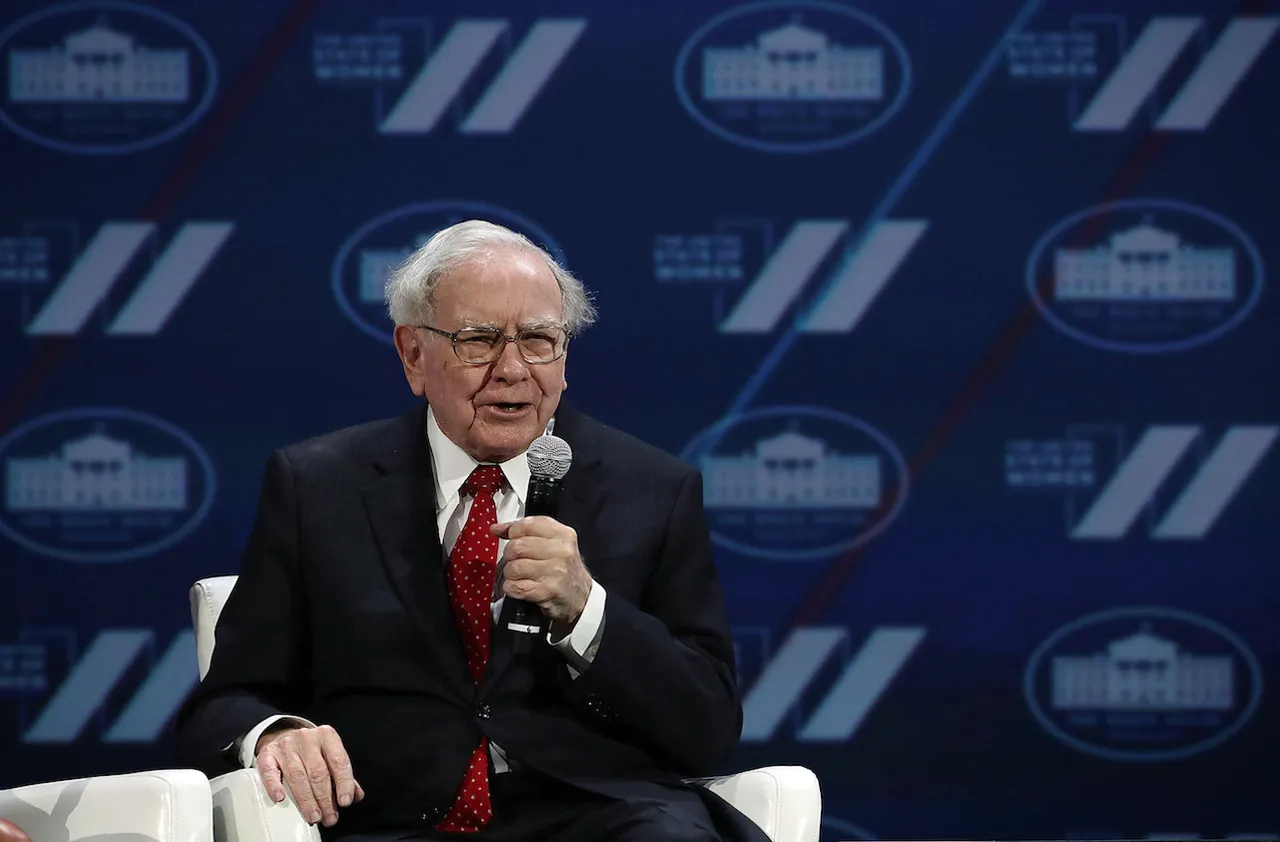
The world’s greatest value investor and chief of Berkshire Hathaway (BRK.B) once again proved the superiority of keeping things simple and cheap vs. complicated and costly when he won a 10-year bet with some folks in the hedge-fund industry at 2017’s end. To recap: In 2007, Buffett made a $1 million wager that a Standard & Poor’s 500-stock index fund would outperform a group of hedge funds over the next decade. If he won, the payout would go to charity.
From just $107.88 $24.99 for Kiplinger Personal Finance
Become a smarter, better informed investor. Subscribe from just $107.88 $24.99, plus get up to 4 Special Issues

Sign up for Kiplinger’s Free Newsletters
Profit and prosper with the best of expert advice on investing, taxes, retirement, personal finance and more - straight to your e-mail.
Profit and prosper with the best of expert advice - straight to your e-mail.
So how did the Oracle of Omaha do against Wall Street’s Masters of the Universe?
He smoked them.
Index Funds Were Better, Cheaper
From the start of the bet in 2007 through the end of 2016, a basket of hedge funds selected by Protégé Partners – the hedge-fund managers with whom Buffett made the bet – returned 2.2% compounded annually. Buffett’s S&P 500 index fund, however, returned 7.1% compounded annually.
Although the final performance numbers won't be available until later this year, the point remains: It's truly extraordinary how much the wealthy investors in these hedge funds paid for so much underperformance.
For the uninitiated, hedge funds are sophisticated investment vehicles generally open only to accredited investors – people with a net worth of at least $1 million, excluding the value of a primary residence, or earned income that exceeded $200,000 (or $300,000 together with a spouse) in each of the prior two years, according to the Securities and Exchange Commission. In other words, these are people of some means.
Hedge funds promise such folks outsize returns through good times and bad. They claim to be staffed by the best and the brightest stock-pickers backed by teams of brilliant research analysts employing the most sophisticated algorithms money can buy.
Naturally, such bespoke service doesn’t come cheap. At the time Buffett made his bet, the typical hedge fund charged a fee of 2% of assets under management and 20% of profits after certain performance thresholds had been met. How whopping are those fees? Get ready for a spit take. The average mutual fund charges about 0.6% of assets under management with no additional performance threshold fees, according to Morningstar.
Buffett has long been a critic of excessive fees, notes David Kass, a professor at the University of Maryland’s Robert H. Smith School of Business who studies Buffett and is a Berkshire shareholder.
“Buffett said at a recent Berkshire annual meeting, when he asked a hedge fund manager why he charges '2 and 20,' the response was 'because I cannot get 3 and 30,'" Kass says.
Indeed, the passively managed Vanguard 500 Index Fund Admiral Shares (VFIAX), which is what Buffett bet on in his wager with the hedge fund machers, charges investors just 0.04%.
Even if you don’t have $10,000 for a minimum investment, the Vanguard S&P 500 ETF (VOO) charges the same 0.04%, and the Vanguard 500 Index Fund Investor Shares (VFINX) charges a still-meager 0.14%.
“Warren Buffett has recommended that when he is no longer here, his wife should invest 90% of her money in a low-cost S&P 500 index fund such as that offered by Vanguard. The other 10% would be invested in Treasuries to provide liquidity,” Kass says.
Fees were hardly the only factor in the wide performance discrepancy.
Recall that the stock market crashed 50% at one point during the timeframe of the wager. The hedge-fund guys had perhaps a once-in-a-lifetime opportunity to buy assets on the cheap and deliver ballistic returns. Yet they failed to even keep pace with the broader market.
“In order for hedge funds to justify their ‘2 and 20’ fee structures, their rates of return after fees must exceed what any investor can earn from a low-cost S&P 500 index fund,” Kass says. “Their fee structures makes this extremely difficult to achieve over time.”
Buffett made the bet as a way to highlight the hedge fund industry’s ridiculous fee structure, but the lessons extend all the way down to even the cheapest actively managed mutual funds. Investors need to keep a sharp eye on costs and returns.
It’s far too easy to overpay for underperformance, even when you’re rich.

-
 Dow Adds 1,206 Points to Top 50,000: Stock Market Today
The S&P 500 and Nasdaq also had strong finishes to a volatile week, with beaten-down tech stocks outperforming.
-
 Ask the Tax Editor: Federal Income Tax Deductions
Ask the Editor In this week's Ask the Editor Q&A, Joy Taylor answers questions on federal income tax deductions
-
 States With No-Fault Car Insurance Laws (and How No-Fault Car Insurance Works)
A breakdown of the confusing rules around no-fault car insurance in every state where it exists.


-
 If You'd Put $1,000 Into AMD Stock 20 Years Ago, Here's What You'd Have Today
Advanced Micro Devices stock is soaring thanks to AI, but as a buy-and-hold bet, it's been a market laggard.
-
 Dow Soars 588 Points as Trump Retreats: Stock Market Today
Another up and down day ends on high notes for investors, traders, speculators and Greenland.
-
 If You'd Put $1,000 Into UPS Stock 20 Years Ago, Here's What You'd Have Today
United Parcel Service stock has been a massive long-term laggard.
-
 Stocks Struggle for Gains to Start 2026: Stock Market Today
It's not quite the end of the world as we know it, but Warren Buffett is no longer the CEO of Berkshire Hathaway.
-
 If You'd Put $1,000 Into Lowe's Stock 20 Years Ago, Here's What You'd Have Today
Lowe's stock has delivered disappointing returns recently, but it's been a great holding for truly patient investors.
-
 Best Mutual Funds to Invest In for 2026
The best mutual funds will capitalize on new trends expected to emerge in the new year, all while offering low costs and solid management.
-
 If You'd Put $1,000 Into 3M Stock 20 Years Ago, Here's What You'd Have Today
MMM stock has been a pit of despair for truly long-term shareholders.
-
 If You'd Put $1,000 Into Coca-Cola Stock 20 Years Ago, Here's What You'd Have Today
Even with its reliable dividend growth and generous stock buybacks, Coca-Cola has underperformed the broad market in the long term.


