How Should YOU Measure Your Investment Performance?
Investors shouldn't be obsessed with their portfolio's performance, but an annual evaluation is key to keeping you on track.


You are now subscribed
Your newsletter sign-up was successful
Want to add more newsletters?

Delivered daily
Kiplinger Today
Profit and prosper with the best of Kiplinger's advice on investing, taxes, retirement, personal finance and much more delivered daily. Smart money moves start here.

Sent five days a week
Kiplinger A Step Ahead
Get practical help to make better financial decisions in your everyday life, from spending to savings on top deals.

Delivered daily
Kiplinger Closing Bell
Get today's biggest financial and investing headlines delivered to your inbox every day the U.S. stock market is open.

Sent twice a week
Kiplinger Adviser Intel
Financial pros across the country share best practices and fresh tactics to preserve and grow your wealth.

Delivered weekly
Kiplinger Tax Tips
Trim your federal and state tax bills with practical tax-planning and tax-cutting strategies.

Sent twice a week
Kiplinger Retirement Tips
Your twice-a-week guide to planning and enjoying a financially secure and richly rewarding retirement

Sent bimonthly.
Kiplinger Adviser Angle
Insights for advisers, wealth managers and other financial professionals.

Sent twice a week
Kiplinger Investing Weekly
Your twice-a-week roundup of promising stocks, funds, companies and industries you should consider, ones you should avoid, and why.

Sent weekly for six weeks
Kiplinger Invest for Retirement
Your step-by-step six-part series on how to invest for retirement, from devising a successful strategy to exactly which investments to choose.
I’ve spent over 25 years in the financial advisory profession but recently had a startling realization about investment performance. During a friendly debate with a friend who manages a small-cap mutual fund, I realized even seasoned investment professionals can have misperceptions about investment performance. My friend had a fixation on top quartile performance, a key measure of his professional ranking, but one with little application in the real world — where clients typically own mutual funds representing various asset classes.
Our debate got me to thinking: How should the average investor measure investment performance? I recommend investors focus on two components of performance:
How is my performance number calculated?
From just $107.88 $24.99 for Kiplinger Personal Finance
Become a smarter, better informed investor. Subscribe from just $107.88 $24.99, plus get up to 4 Special Issues

Sign up for Kiplinger’s Free Newsletters
Profit and prosper with the best of expert advice on investing, taxes, retirement, personal finance and more - straight to your e-mail.
Profit and prosper with the best of expert advice - straight to your e-mail.
How is my account doing relative to a fair benchmark?
Your Performance Calculation
The performance calculation methodology involves two key variables: 1) the mathematical formula used to produce a return figure and 2) the portfolio(s) that are being measured. Most professional money managers use a Global Investment Performance Standards (GIPS) compliant methodology to calculate investment performance. Brokers, Registered Investment Advisers and custodians often provide performance information to clients in their account statements. It is important to ask your provider if their performance report uses an approved GIPS methodology. Time-weighted returns are the most commonly used measure.
Interestingly, GIPS does not require investment performance to be reported net of fees. Consumers would be wise to ask their adviser for performance reports net of fees. After all, it’s not what you earn, it’s what you keep that is important.
Equally important is understanding whether the performance number is specific to your account, or merely a listing of the performance of each mutual fund. According to the GIPS guidance statement on fees, “The GIPS standards are based on the concept of presenting composite performance to prospective clients rather than presenting individual portfolio returns to existing clients (emphasis added).” Very simply, it is permissible for a broker or custodian to show a performance number on your statement for XYZ mutual fund that may or may not be your actual investment performance.
I’ve seen brokerage statements list a client’s various mutual fund’s performance, but not include the client’s overall account performance. Investors should ask their adviser for their specific account’s performance net of all fees. Most advisers have software that can calculate this.
Which Benchmark to Use
What about benchmarks? How can investors gauge their performance relative to other alternatives? This simple question raises many issues.
Should you benchmark your portfolio versus an index like the S&P 500? What’s a fair comparison for a portfolio invested 65% equity / 35% fixed? What about an all-equity portfolio comprised of large-cap, small-cap, international, REITs and emerging markets?
Morningstar provides a quarterly list of average returns by category, which is a reasonable basic benchmark to measure a specific fund. For accounts using a diversified, multiple asset class approach, Morningstar provides returns for different asset allocation funds, sorted by equity ranges. This is a helpful guide should your portfolio be comprised of large-cap, small-cap, international and emerging market funds.
The Bottom Line
While an obsession with performance can be counterproductive (often leading to chasing past winners and inferior performance), an annual review of portfolio performance is something all investors should undertake. Make sure you understand what is being measured and how it is being measured so you can track progress toward your goals.

-
 Dow Adds 1,206 Points to Top 50,000: Stock Market Today
The S&P 500 and Nasdaq also had strong finishes to a volatile week, with beaten-down tech stocks outperforming.
-
 Ask the Tax Editor: Federal Income Tax Deductions
Ask the Editor In this week's Ask the Editor Q&A, Joy Taylor answers questions on federal income tax deductions
-
 States With No-Fault Car Insurance Laws (and How No-Fault Car Insurance Works)
A breakdown of the confusing rules around no-fault car insurance in every state where it exists.


-
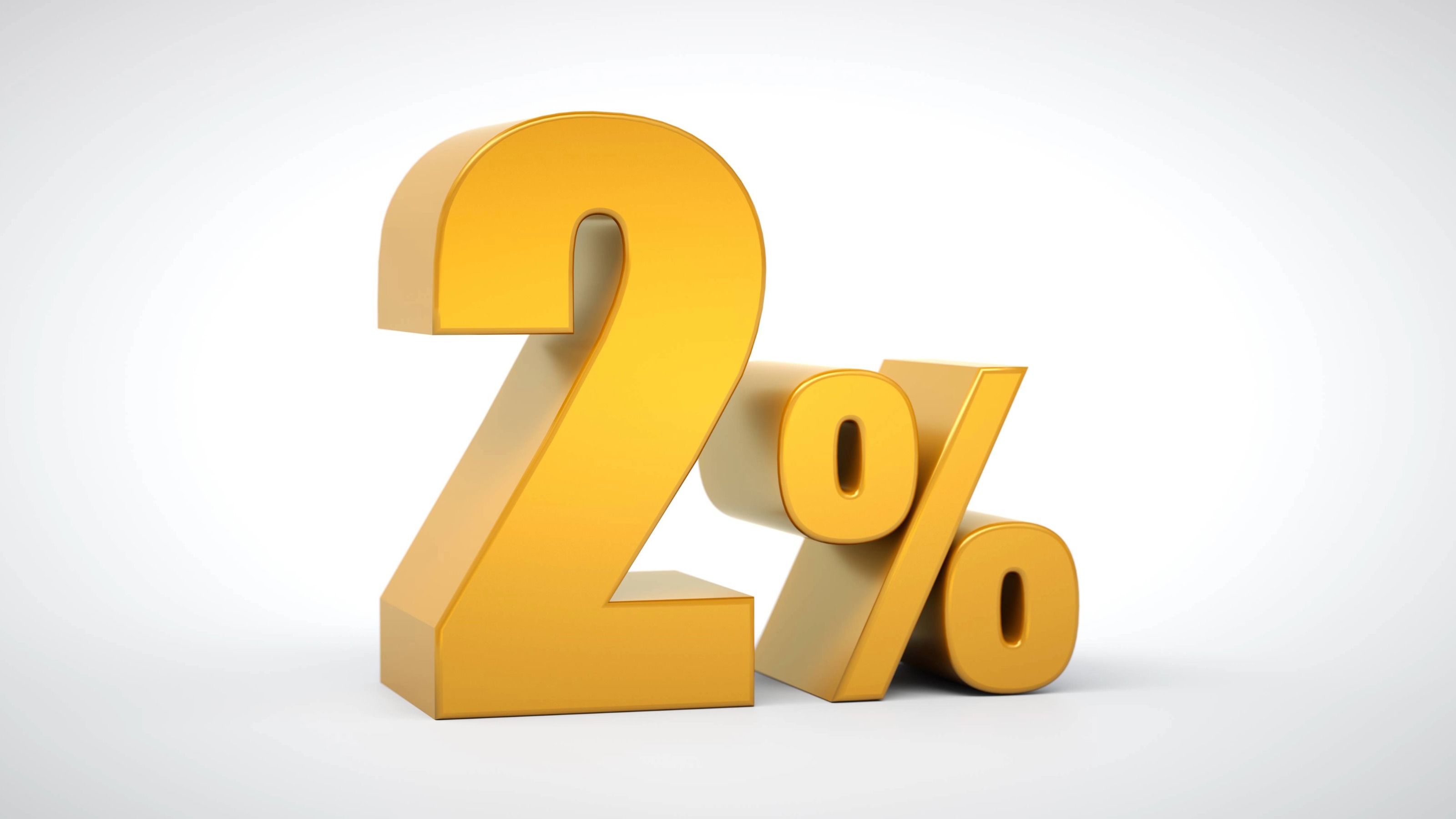 For the 2% Club, the Guardrails Approach and the 4% Rule Do Not Work: Here's What Works Instead
For retirees with a pension, traditional withdrawal rules could be too restrictive. You need a tailored income plan that is much more flexible and realistic.
-
 Retiring Next Year? Now Is the Time to Start Designing What Your Retirement Will Look Like
This is when you should be shifting your focus from growing your portfolio to designing an income and tax strategy that aligns your resources with your purpose.
-
 I'm a Financial Planner: This Layered Approach for Your Retirement Money Can Help Lower Your Stress
To be confident about retirement, consider building a safety net by dividing assets into distinct layers and establishing a regular review process. Here's how.
-
 The 4 Estate Planning Documents Every High-Net-Worth Family Needs (Not Just a Will)
The key to successful estate planning for HNW families isn't just drafting these four documents, but ensuring they're current and immediately accessible.
-
 Love and Legacy: What Couples Rarely Talk About (But Should)
Couples who talk openly about finances, including estate planning, are more likely to head into retirement joyfully. How can you get the conversation going?
-
 How to Get the Fair Value for Your Shares When You Are in the Minority Vote on a Sale of Substantially All Corporate Assets
When a sale of substantially all corporate assets is approved by majority vote, shareholders on the losing side of the vote should understand their rights.
-
 How to Add a Pet Trust to Your Estate Plan: Don't Leave Your Best Friend to Chance
Adding a pet trust to your estate plan can ensure your pets are properly looked after when you're no longer able to care for them. This is how to go about it.
-
 Want to Avoid Leaving Chaos in Your Wake? Don't Leave Behind an Outdated Estate Plan
An outdated or incomplete estate plan could cause confusion for those handling your affairs at a difficult time. This guide highlights what to update and when.


