Will You Have to Pay Back Any of Your Stimulus Check?
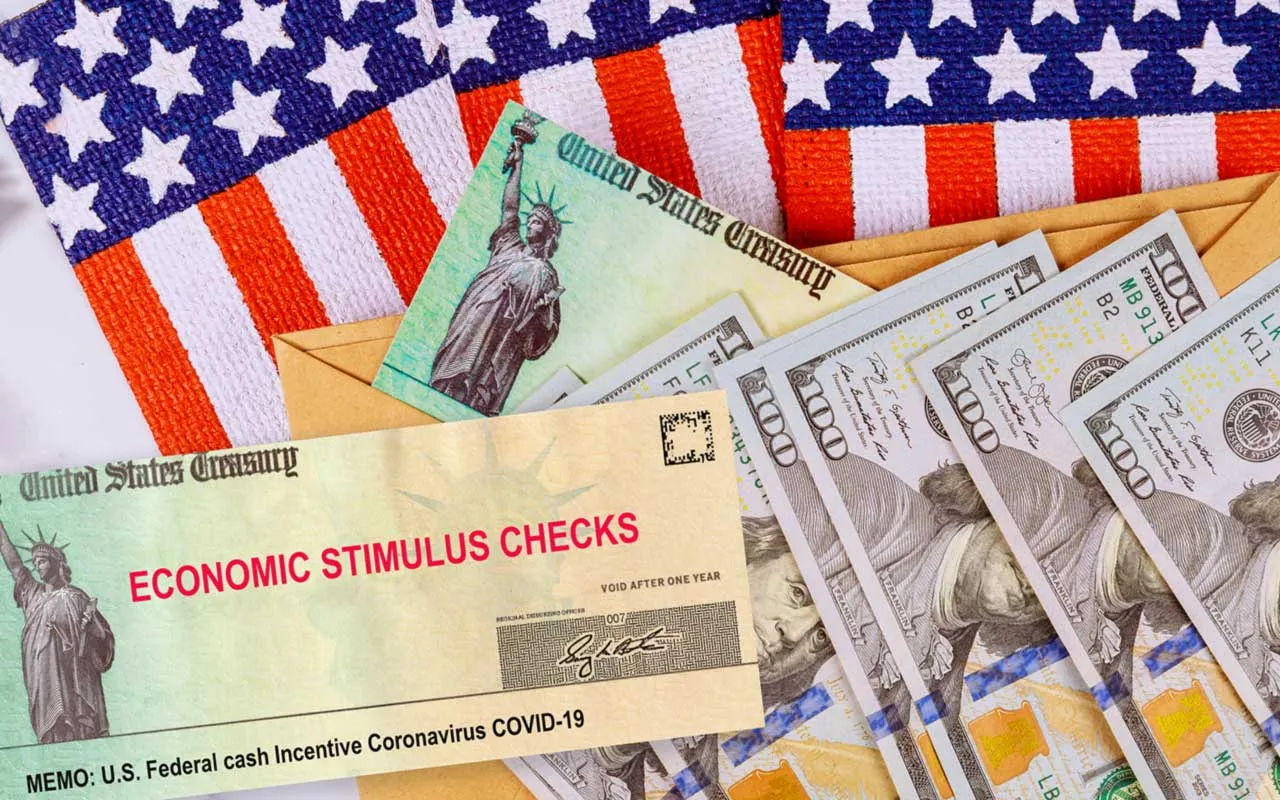
People who, for whatever reason, got a larger stimulus check payment then they expected have been wondering if paybacks will be required. The IRS finally answered the question for most people.

You are now subscribed
Your newsletter sign-up was successful
Want to add more newsletters?

Delivered daily
Kiplinger Today
Profit and prosper with the best of Kiplinger's advice on investing, taxes, retirement, personal finance and much more delivered daily. Smart money moves start here.

Sent five days a week
Kiplinger A Step Ahead
Get practical help to make better financial decisions in your everyday life, from spending to savings on top deals.

Delivered daily
Kiplinger Closing Bell
Get today's biggest financial and investing headlines delivered to your inbox every day the U.S. stock market is open.

Sent twice a week
Kiplinger Adviser Intel
Financial pros across the country share best practices and fresh tactics to preserve and grow your wealth.

Delivered weekly
Kiplinger Tax Tips
Trim your federal and state tax bills with practical tax-planning and tax-cutting strategies.

Sent twice a week
Kiplinger Retirement Tips
Your twice-a-week guide to planning and enjoying a financially secure and richly rewarding retirement

Sent bimonthly.
Kiplinger Adviser Angle
Insights for advisers, wealth managers and other financial professionals.

Sent twice a week
Kiplinger Investing Weekly
Your twice-a-week roundup of promising stocks, funds, companies and industries you should consider, ones you should avoid, and why.

Sent weekly for six weeks
Kiplinger Invest for Retirement
Your step-by-step six-part series on how to invest for retirement, from devising a successful strategy to exactly which investments to choose.
We all hope the stimulus checks that Americans are getting will help pull the country out of the coronavirus-induced economic mess we're in right now. But there have been many questions surrounding the payments themselves and how they're being processed. Who qualifies? How much money will I get? When will payments be sent? Why can't I track the status of my payment? The IRS has, for the most part, done a pretty good job of answering these questions over the past few weeks. However, there is one burning question that the IRS didn't answer until now: Will I have to pay back any stimulus check money if I got too much?
(Use our Stimulus Check Calculator to see how much money you'll get. For answers to other stimulus check questions, see Your 2020 Stimulus Check: How Much? When? And Other Questions Answered.)
Paybacks Won't be Required in Most Cases
The IRS recently acknowledged that "there is no provision in the law requiring repayment" of a stimulus check. The way the law is written, stimulus checks are actually just advanced payments of a new "recovery rebate" tax credit for the 2020 tax year. If your check is less than your 2020 recovery rebate credit, the law specifically says you'll get the difference when you file your 2020 tax return next year. But the law is not so clear on what happens if your stimulus check is more than your 2020 credit. Thankfully, the IRS has provided guidance. You won't be required to repay any stimulus payment amount when filing your 2020 tax return, it says.
From just $107.88 $24.99 for Kiplinger Personal Finance
Become a smarter, better informed investor. Subscribe from just $107.88 $24.99, plus get up to 4 Special Issues

Sign up for Kiplinger’s Free Newsletters
Profit and prosper with the best of expert advice on investing, taxes, retirement, personal finance and more - straight to your e-mail.
Profit and prosper with the best of expert advice - straight to your e-mail.
Who's Getting a Stimulus Check That's More Than the Credit Amount?
The amount of your stimulus check is based on your filing status, your adjusted gross income (AGI), and the number of children you have who qualify for the child tax credit (they must be 16 years old or younger). If you filed a 2018 or 2019 tax return, the IRS will get this information from one of those returns (whichever one you filed most recently). However, you could have a change in circumstances this year that shrinks the recovery rebate credit allowed for 2020. This could mean that the stimulus check you receive this year is larger than the authorized tax credit on your 2020 return. Here are a few examples:
Change in Filing Status. Harold and Maude got divorced in 2020. They have a combined 2020 AGI of $160,000 ($100,000 for Harold and $60,000 for Maude), which is the same total AGI they had in 2019. Since they have no kids and filed a 2019 joint return, they received a $1,900 stimulus check. However, based on separate 2020 returns (single filing status for each), Maude qualifies for a $1,200 recovery rebate credit, but Josh doesn't qualify for a credit at all because his 2020 AGI is too high. Harold and Maude will not have to pay back the additional $700.
Increased Income. Nicholas got a promotion and a big raise in 2020. As a result, his AGI jumped from $80,000 in 2019 to $95,000 in 2020. He is single with no children. Based on his 2019 return, Nicholas received a $950 stimulus check. However, based on his 2020 AGI, he will only qualify for a $200 recovery rebate on his 2020 tax return. Nicholas will not have to pay back the $750 difference.
Child No Longer Qualifies for Child Tax Credit. Andrew and Becky have a child who turns 17 in 2020. They were able to claim the child tax credit on their 2019 tax return, which they filed in February 2020. As a result, they got an extra $500 in their stimulus check. However, since they cannot claim the child tax credit on their 2020 return, their recovery rebate credit does not include the additional $500. Andrew and Becky will not have to pay back the $500.
What About Erroneous Stimulus Payments?
What if the IRS accidently sends you two stimulus checks? Can you keep both of them? Probably not. For situations like this, expect the IRS to use its regulatory powers to "avoid allowing multiple credits or rebates to a taxpayer." So, I wouldn't spend that money if I were you. Same goes for stimulus money obtain through fraudulent means—not that you'd do such a thing!
For more information, see What to Do If Your Stimulus Check is For the Wrong Amount.

-
 Ask the Tax Editor: Federal Income Tax Deductions
Ask the Editor In this week's Ask the Editor Q&A, Joy Taylor answers questions on federal income tax deductions
-
 States With No-Fault Car Insurance Laws (and How No-Fault Car Insurance Works)
A breakdown of the confusing rules around no-fault car insurance in every state where it exists.
-
 Why Picking a Retirement Age Feels Impossible (and How to Finally Decide)
Struggling with picking a date? Experts explain how to get out of your head and retire on your own terms.


-
 Avoid a Tax Surprise After Your 2026 Super Bowl Bets: A New IRS Rule to Know
Taxable Income When Super Bowl LX hype fades, some fans may be surprised to learn that sports betting tax rules have shifted.
-
 Should You Do Your Own Taxes This Year or Hire a Pro?
Taxes Doing your own taxes isn’t easy, and hiring a tax pro isn’t cheap. Here’s a guide to help you figure out whether to tackle the job on your own or hire a professional.
-
 Can I Deduct My Pet On My Taxes?
Tax Deductions Your cat isn't a dependent, but your guard dog might be a business expense. Here are the IRS rules for pet-related tax deductions in 2026.
-
 Don't Overpay the IRS: 6 Tax Mistakes That Could Be Raising Your Bill
Tax Tips Is your income tax bill bigger than expected? Here's how you should prepare for next year.
-
 Oregon Tax Kicker in 2026: What's Your Refund?
State Tax The Oregon kicker for 2025 state income taxes is coming. Here's how to calculate your credit and the eligibility rules.
-
 Will IRS Budget Cuts Disrupt Tax Season? What You Need to Know
Taxes The 2026 tax season could be an unprecedented one for the IRS. Here’s how you can be proactive to keep up with the status of your return.
-
 3 Retirement Changes to Watch in 2026: Tax Edition
Retirement Taxes Between the Social Security "senior bonus" phaseout and changes to Roth tax rules, your 2026 retirement plan may need an update. Here's what to know.
-
 Tax Season 2026 Is Here: 8 Big Changes to Know Before You File
Tax Season Due to several major tax rule changes, your 2025 return might feel unfamiliar even if your income looks the same.


