How to Invest in Sports
If it's springtime, Forbes is out with its annual list of baseball franchise values. The billions involved might make you wonder how to invest in sports.

You are now subscribed
Your newsletter sign-up was successful
Want to add more newsletters?

Delivered daily
Kiplinger Today
Profit and prosper with the best of Kiplinger's advice on investing, taxes, retirement, personal finance and much more delivered daily. Smart money moves start here.

Sent five days a week
Kiplinger A Step Ahead
Get practical help to make better financial decisions in your everyday life, from spending to savings on top deals.

Delivered daily
Kiplinger Closing Bell
Get today's biggest financial and investing headlines delivered to your inbox every day the U.S. stock market is open.

Sent twice a week
Kiplinger Adviser Intel
Financial pros across the country share best practices and fresh tactics to preserve and grow your wealth.

Delivered weekly
Kiplinger Tax Tips
Trim your federal and state tax bills with practical tax-planning and tax-cutting strategies.

Sent twice a week
Kiplinger Retirement Tips
Your twice-a-week guide to planning and enjoying a financially secure and richly rewarding retirement

Sent bimonthly.
Kiplinger Adviser Angle
Insights for advisers, wealth managers and other financial professionals.

Sent twice a week
Kiplinger Investing Weekly
Your twice-a-week roundup of promising stocks, funds, companies and industries you should consider, ones you should avoid, and why.

Sent weekly for six weeks
Kiplinger Invest for Retirement
Your step-by-step six-part series on how to invest for retirement, from devising a successful strategy to exactly which investments to choose.
If you're a fan, you already know how to invest in sports. The question is whether you can turn your passion into a reasonable – and tangible – rate of return.
As CAIS Group notes in a September 2024 report, sports is "a culturally resonant sector with long-term staying power that appears poised for continued growth."
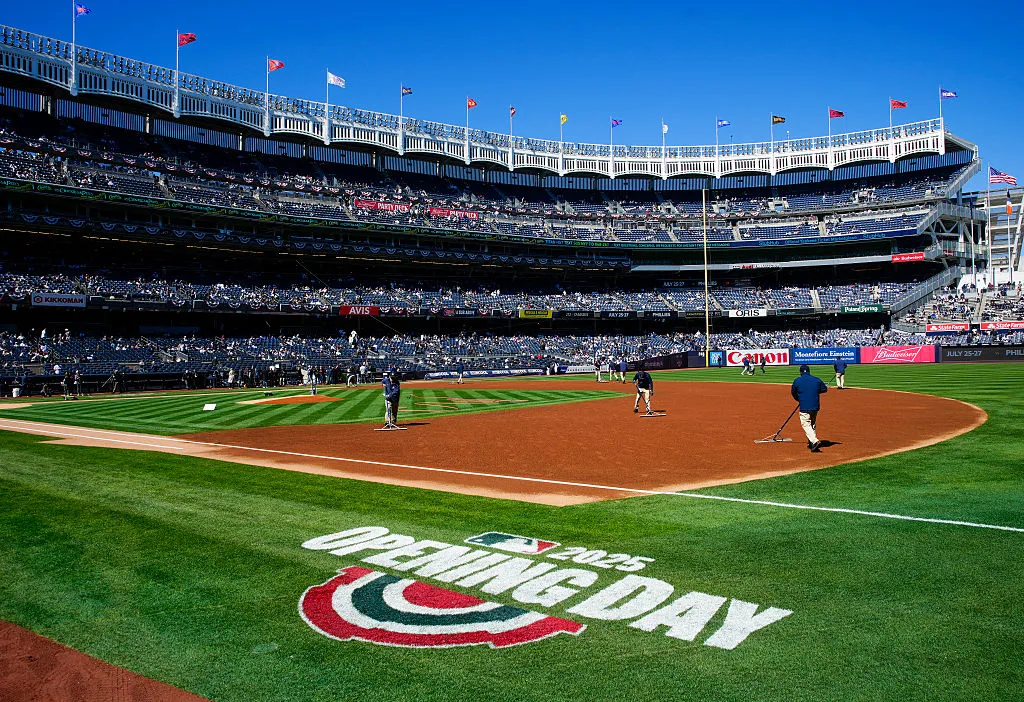
Everybody dreams of doing something like playing third base or even pitching for the New York Yankees. And a lot of us do get to do stuff like go to Yankee Stadium.
From just $107.88 $24.99 for Kiplinger Personal Finance
Become a smarter, better informed investor. Subscribe from just $107.88 $24.99, plus get up to 4 Special Issues

Sign up for Kiplinger’s Free Newsletters
Profit and prosper with the best of expert advice on investing, taxes, retirement, personal finance and more - straight to your e-mail.
Profit and prosper with the best of expert advice - straight to your e-mail.
But future "Seinfeld" icon George Steinbrenner paid Columbia Broadcasting System (CBS) $8.8 million for the Bronx Bombers in 1973. According to Forbes, Major League Baseball's flagship franchise is now worth $8.2 billion.
We can all get our heads around the benefits of that kind of upside. I'm sure CBS, which is now part of Paramount Global (PARA), appreciates what might have been.
Indeed, the evolution of sports from programming into content over the last half-century is a big part of the massive rise in franchise values across MLB as well as the National Football League, the National Basketball Association and others like them all over the world.
So, here's how to invest in sports – for real total returns.
Equity listings are a slam dunk
Nasdaq Chief Economist Phil Mackintosh recently wrote about the history of publicly traded sports teams. "Equity listings are a slam dunk for sports teams" is a great line.
And, as Mackintosh notes, "Pro sports teams have been publicly traded on and off for decades."
The NBA's Boston Celtics went public in 1986, right after Larry Bird led them to their 16th league championship. A flagship franchise like the Yankees, the Celtics went private again in 2002 in a $360 million deal led by local private equity billionaires.
After adding a couple more banners to the rafters at TD Garden, they were just sold for $6.1 billion.
Both the Cleveland Guardians of MLB and the National Hockey League's Florida Panthers traded on the Nasdaq for a few years in the 1990s.
Right now, the MLB's Atlanta Braves (BATRA, BATRK) are listed on the Nasdaq.
The NBA's New York Knicks and the NHL's New York Rangers trade publicly through their parent company, Madison Square Garden Sports (MSGS). So do the Toronto Blue Jays (MLB), Maple Leafs (NHL) and Raptors (NBA) through Rogers Communications (RCI).
The London-based Barclays Premier League is the biggest soccer league in the world. Its flagship club, Manchester United (MANU) is listed on the New York Stock Exchange.
German football club Borussia Dortmund (BVB) is listed on the Frankfurt Stock Exchange. And Italy-based Juventus Football Club trades through Exor, a holding company listed on Euronext Amsterdam under the symbol EXO.
The NFL's historic Green Bay Packers is publicly owned but not publicly traded. The team has offered stock sales to its supporters but is a nonprofit organization. The Pack is purely about the passion.
According to Forbes, Nielsen Sports data suggest the real, real opportunity is old-fashioned motorsports: Formula 1 (F1) is the fastest-growing annual series in the world. And F1 parent Liberty Media (FWONA, FWONK) is listed on the Nasdaq, with the FWONK shares part of the Berkshire Hathaway equity portfolio.
TKO Group (TKO) is a way to invest in non-traditional sports. TKO owns the Ultimate Fighting Championship (UFC) mixed martial arts series and the World Wrestling Entertainment (WWE) professional wrestling operation.
ETFs Are a Layup
The evolution of sports from programming to content has also allowed for the expansion of what we think of as "sports."
The best ETFs to buy probably have some of this exposure. You can also invest in thematic exchange-traded funds focused on a number of sub-sectors and emerging industries.
It's a broad range of businesses that includes sports betting. It also encompasses digital sports entertainment such as esports and gaming.
And then there's sports broadcasting and sports and athletic technology such as wearables and energy drinks and foods marketed to athletes.
The VanEck Gaming ETF (BJK) is the No. 1 example of a sports-themed ETF. BJK launched in 2008 as the first global gaming ETF and now has $26.7 million in assets under management.
It charges 0.67% per year, or $67 per $10,000 invested.
Top holdings include Flutter Entertainment (FLUT), Aristocrat Leisure (ARLUF) and VICI Properties (VICI).
REITs
As it is for the best ETFs so it goes for the best REITs: They probably already have some exposure to the ever-expanding sports industry.
Real estate investment trusts own and operate real estate properties. That includes commercial properties such as stadiums and arenas as well as related training and other team facilities.
Buying a sports REIT is a way to diversify your portfolio and generate income from dividends.
Top sports-focused REITs include VICI Properties as well as Gaming and Leisure Properties (GLPI).
Private equity players
Here's where it gets rich. Since 2019, U.S. professional sports leagues have been expanding their rules for who and what can invest in their franchises.
This is a particularly lucrative trend for accredited investors. It opens up opportunities in companies – and teams – that aren't publicly traded.
"There is a tremendous amount of inexperienced capital chasing sports," notes RedBird Capital Partners founder Gerry Cardinale, who thinks "everybody has to calm down a little bit."
Cardinale advocates for "sober, unemotional, non-trophy-hunting investing in sports."
According to the Securities and Exchange Commission, you're an accredited investor if you have a net worth greater than $1 million, excluding the value of your primary residence.
Another way to qualify is if you earned $200,000 or more ($300,000 with a spouse or partner) for the previous two years and you expect the same level of income for the current year.
Of course, if you aren't an accredited investor, there are private equity ETFs focused on how to invest in sports.
The place to begin your research is the Invesco Global Listed Private Equity ETF (PSP), which has about $260 million under management.
The expense ratio is steep at 1.79%. Top holdings include Blackstone (BX), the world's largest alternative asset manager with more than $1 trillion on its books.
Blackstone hasn't made direct investments in sports teams. But it continues to explore its opportunities.
And David Blitzer, a senior Blackstone executive, owns stakes in the NFL's Washington Commanders, the NBA's Philadelphia 76ers and the NHL's New Jersey Devils through his firm, Harris Blitzer Sports & Entertainment.
Blitzer clearly has ideas about how to invest in sports.
Related content

-
 Dow Adds 1,206 Points to Top 50,000: Stock Market Today
The S&P 500 and Nasdaq also had strong finishes to a volatile week, with beaten-down tech stocks outperforming.
-
 Ask the Tax Editor: Federal Income Tax Deductions
Ask the Editor In this week's Ask the Editor Q&A, Joy Taylor answers questions on federal income tax deductions
-
 States With No-Fault Car Insurance Laws (and How No-Fault Car Insurance Works)
A breakdown of the confusing rules around no-fault car insurance in every state where it exists.


-
Dow Adds 1,206 Points to Top 50,000: Stock Market Today
The S&P 500 and Nasdaq also had strong finishes to a volatile week, with beaten-down tech stocks outperforming.
-
 The Best Precious Metals ETFs to Buy in 2026
Precious metals ETFs provide a hedge against monetary debasement and exposure to industrial-related tailwinds from emerging markets.
-
 For the 2% Club, the Guardrails Approach and the 4% Rule Do Not Work: Here's What Works Instead
For retirees with a pension, traditional withdrawal rules could be too restrictive. You need a tailored income plan that is much more flexible and realistic.
-
 Retiring Next Year? Now Is the Time to Start Designing What Your Retirement Will Look Like
This is when you should be shifting your focus from growing your portfolio to designing an income and tax strategy that aligns your resources with your purpose.
-
 I'm a Financial Planner: This Layered Approach for Your Retirement Money Can Help Lower Your Stress
To be confident about retirement, consider building a safety net by dividing assets into distinct layers and establishing a regular review process. Here's how.
-
 Stocks Sink With Alphabet, Bitcoin: Stock Market Today
A dismal round of jobs data did little to lift sentiment on Thursday.
-
 The 4 Estate Planning Documents Every High-Net-Worth Family Needs (Not Just a Will)
The key to successful estate planning for HNW families isn't just drafting these four documents, but ensuring they're current and immediately accessible.
-
 Love and Legacy: What Couples Rarely Talk About (But Should)
Couples who talk openly about finances, including estate planning, are more likely to head into retirement joyfully. How can you get the conversation going?


