Switch Accounts for a Better Yield?
If your current account has a reliable history of strong yields, it might be worth sticking around.


You are now subscribed
Your newsletter sign-up was successful
Want to add more newsletters?

Delivered daily
Kiplinger Today
Profit and prosper with the best of Kiplinger's advice on investing, taxes, retirement, personal finance and much more delivered daily. Smart money moves start here.

Sent five days a week
Kiplinger A Step Ahead
Get practical help to make better financial decisions in your everyday life, from spending to savings on top deals.

Delivered daily
Kiplinger Closing Bell
Get today's biggest financial and investing headlines delivered to your inbox every day the U.S. stock market is open.

Sent twice a week
Kiplinger Adviser Intel
Financial pros across the country share best practices and fresh tactics to preserve and grow your wealth.

Delivered weekly
Kiplinger Tax Tips
Trim your federal and state tax bills with practical tax-planning and tax-cutting strategies.

Sent twice a week
Kiplinger Retirement Tips
Your twice-a-week guide to planning and enjoying a financially secure and richly rewarding retirement

Sent bimonthly.
Kiplinger Adviser Angle
Insights for advisers, wealth managers and other financial professionals.

Sent twice a week
Kiplinger Investing Weekly
Your twice-a-week roundup of promising stocks, funds, companies and industries you should consider, ones you should avoid, and why.

Sent weekly for six weeks
Kiplinger Invest for Retirement
Your step-by-step six-part series on how to invest for retirement, from devising a successful strategy to exactly which investments to choose.
Interest rates on savings accounts often fluctuate, making the hunt for the highest yield on your savings stash a cat-and-mouse game. If your account’s yield falls, is it worth switching to a different account offering a better rate? After all, the new account’s yield could drop at any time, too.
Doing some math can help you make the call. Say you have $10,000 in a savings account with a rate that recently dropped to 0.4%. Over the next year, you’ll earn about $40 in interest if the rate remains steady. If you move the money to an account yielding 0.7% — one of the top rates available recently — you’ll earn about $70 in interest over a year, or $30 more, if the yield stays the same (but that’s a big if).
If you hold a bigger balance, switching becomes more compelling. “The more you have in the savings account, the larger the difference, and that can make even a small rate advantage worthwhile,” says Ken Tumin, of DepositAccounts.com. Using the example above but with a $50,000 balance, you’d earn about $150 more in interest by moving your money to the higher-yielding account. With a $100,000 balance, the difference is about $300. You can run the numbers by visiting Investor.gov, hovering over the “Financial Tools & Calculators” tab and selecting “Compound Interest Calculator.”
From just $107.88 $24.99 for Kiplinger Personal Finance
Become a smarter, better informed investor. Subscribe from just $107.88 $24.99, plus get up to 4 Special Issues

Sign up for Kiplinger’s Free Newsletters
Profit and prosper with the best of expert advice on investing, taxes, retirement, personal finance and more - straight to your e-mail.
Profit and prosper with the best of expert advice - straight to your e-mail.
Look for consistency. Accounts that have reliably offered strong yields in the past are more likely to continue providing above-average rates than those that occasionally dangle chart-topping yields to attract customers. To see a list of the highest-yielding accounts in your area, visit Depositaccounts. For each account, you can click on “Details” to see its rate history. Tumin notes that in an index of 10 well-established online savings accounts that DepositAccounts tracks, the no-fee accounts from Live Oak Bank (0.6% yield), SFGI Direct (0.56% yield) and Synchrony (0.55% yield) recently offered rates higher than the index average of 0.49%, and they’ve had above-average rates for the past three and a half years, too.

-
 Dow Adds 1,206 Points to Top 50,000: Stock Market Today
The S&P 500 and Nasdaq also had strong finishes to a volatile week, with beaten-down tech stocks outperforming.
-
 Ask the Tax Editor: Federal Income Tax Deductions
Ask the Editor In this week's Ask the Editor Q&A, Joy Taylor answers questions on federal income tax deductions
-
 States With No-Fault Car Insurance Laws (and How No-Fault Car Insurance Works)
A breakdown of the confusing rules around no-fault car insurance in every state where it exists.


-
 9 Types of Insurance You Probably Don't Need
Financial Planning If you're paying for these types of insurance, you may be wasting your money. Here's what you need to know.
-
 Money for Your Kids? Three Ways Trump's ‘Big Beautiful Bill’ Impacts Your Child's Finances
Tax Tips The Trump tax bill could help your child with future education and homebuying costs. Here’s how.
-
 Key 2025 Tax Changes for Parents in Trump's Megabill
Tax Changes Are you a parent? The so-called ‘One Big Beautiful Bill’ (OBBB) impacts several key tax incentives that can affect your family this year and beyond.
-
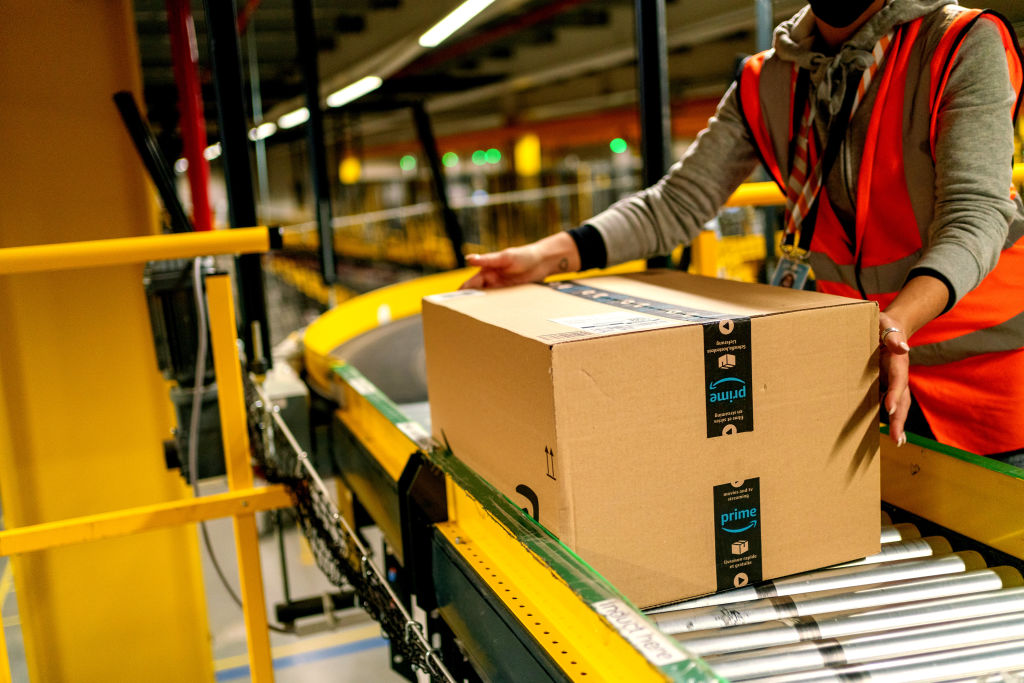 Amazon Resale: Where Amazon Prime Returns Become Your Online Bargains
Feature Amazon Resale products may have some imperfections, but that often leads to wildly discounted prices.
-
 What Does Medicare Not Cover? Eight Things You Should Know
Medicare Part A and Part B leave gaps in your healthcare coverage. But Medicare Advantage has problems, too.
-
 QCD Limit, Rules and How to Lower Your 2026 Taxable Income
Tax Breaks A QCD can reduce your tax bill in retirement while meeting charitable giving goals. Here’s how.
-
 Roth IRA Contribution Limits for 2026
Roth IRAs Roth IRAs allow you to save for retirement with after-tax dollars while you're working, and then withdraw those contributions and earnings tax-free when you retire. Here's a look at 2026 limits and income-based phaseouts.
-
 Four Tips for Renting Out Your Home on Airbnb
real estate Here's what you should know before listing your home on Airbnb.


