How the Government Shutdown Could Disrupt Your Travel Plans
Airports remain open for now, but a prolonged shutdown could bring longer lines, slower processing and closures at parks and museums.

You are now subscribed
Your newsletter sign-up was successful
Want to add more newsletters?

Delivered daily
Kiplinger Today
Profit and prosper with the best of Kiplinger's advice on investing, taxes, retirement, personal finance and much more delivered daily. Smart money moves start here.

Sent five days a week
Kiplinger A Step Ahead
Get practical help to make better financial decisions in your everyday life, from spending to savings on top deals.

Delivered daily
Kiplinger Closing Bell
Get today's biggest financial and investing headlines delivered to your inbox every day the U.S. stock market is open.

Sent twice a week
Kiplinger Adviser Intel
Financial pros across the country share best practices and fresh tactics to preserve and grow your wealth.

Delivered weekly
Kiplinger Tax Tips
Trim your federal and state tax bills with practical tax-planning and tax-cutting strategies.

Sent twice a week
Kiplinger Retirement Tips
Your twice-a-week guide to planning and enjoying a financially secure and richly rewarding retirement

Sent bimonthly.
Kiplinger Adviser Angle
Insights for advisers, wealth managers and other financial professionals.

Sent twice a week
Kiplinger Investing Weekly
Your twice-a-week roundup of promising stocks, funds, companies and industries you should consider, ones you should avoid, and why.

Sent weekly for six weeks
Kiplinger Invest for Retirement
Your step-by-step six-part series on how to invest for retirement, from devising a successful strategy to exactly which investments to choose.
The U.S. government officially shut down on October 1, after Congress failed to reach a budget deal. For travelers, that doesn’t mean flights grind to a halt right away — but the longer the shutdown drags on, the greater the chance of delays and headaches.
Airport security screeners, air traffic controllers and customs officers are considered essential, so they’ll keep working through the shutdown. The catch is that they won’t be paid until it ends, and in past shutdowns, that’s led to staffing shortages as frustration builds.
If this shutdown stretches on, travelers could start to see longer lines, slower processing and other ripple effects across the system. Here’s what to expect if your plans overlap with a prolonged government shutdown.
From just $107.88 $24.99 for Kiplinger Personal Finance
Become a smarter, better informed investor. Subscribe from just $107.88 $24.99, plus get up to 4 Special Issues

Sign up for Kiplinger’s Free Newsletters
Profit and prosper with the best of expert advice on investing, taxes, retirement, personal finance and more - straight to your e-mail.
Profit and prosper with the best of expert advice - straight to your e-mail.
What happens to travel in a long government shutdown
The U.S. travel economy now risks losing $1 billion per week due to disruptions in air and rail travel and the shutdown of national parks and cultural institutions, according to Tourism Economics.
A shutdown halts appropriations to such agencies as the Federal Aviation Administration (FAA), Transportation Security Administration (TSA) and Customs and Border Protection. While essential services continue, hiring, training and other critical support functions stall, creating ripple effects that worsen the longer funding is frozen.
For now, essential workers (e.g. screeners, air traffic controllers, customs officers) remain on duty — but without pay until the funding is restored.
The real pressure point for air travelers during a government shutdown occurs when frustrated federal employees tire of not receiving a paycheck and start calling out sick in large numbers, as they did during the 35-day government shutdown in late 2018 and early 2019.
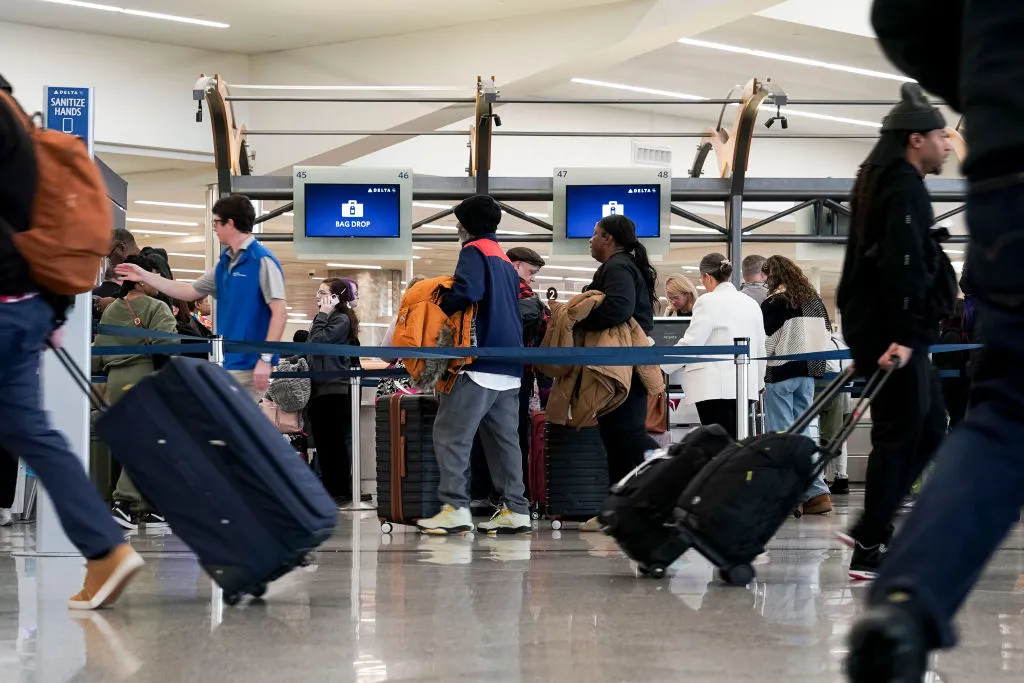
When TSA agents and air traffic controllers are stretched thin, airport lines grow longer, wait times extend into hours, and travelers begin to feel the brunt of the shutdown.
How the government shutdown could affect your upcoming trip

If you’re hitting the road or catching a flight in the coming days, the shutdown shouldn’t immediately derail your plans. Airport security, customs and air traffic control are still operating, though the employees working those jobs aren’t being paid. For now, that means most trips will move ahead as scheduled.
The real concern comes if the shutdown stretches on. As workers miss paychecks, staffing levels can thin, leading to longer lines and slower processing at TSA checkpoints — even for travelers using Clear, TSA PreCheck or Global Entry.
To stay ahead, lean on holiday travel best practices: Allow extra time; bring TSA-approved snacks; and brace for delays. With record numbers of passengers expected this season, patience will be essential if the shutdown continues.
Other ways a government shutdown impacts travel plans
Even if you're not traveling by air, your travel and holiday plans could still be disrupted by a government shutdown, because it could also result in the closing of national parks, federally owned museums, monuments and attractions.
Many people who work in those places aren't deemed essential. In 2018-2019, many of these federal tourist attractions furloughed workers and were either closed or operated with skeleton staffs that resulted in subpar conditions, such as overflowing toilets and garbage cans.
If you were planning to drive to a nearby park or attraction, double-check that it's open before you go.
Takeaways of a government shutdown's impact on travel
Travelers wondering how their trips might be impacted if the government shuts down should look at what happened during the longest-ever government shutdown in 2018 and 2019 as a roadmap.
Here are some takeaways:
Duration of the shutdown matters. In the last shutdown, news reports of hour-plus-long lines at airports, flight delays, and the closing of some terminals at major airports such as Miami International Airport didn’t occur until mid-January 2019, or roughly three weeks into the shutdown.
The staff shortages at airports caused by government workers calling out sick tended to pick up when these federal employees missed their first or second paycheck and started to feel the financial squeeze.
Check your documents. Getting a passport might also take longer due to staffing shortages. It’s possible that passport offices located inside federal buildings could close, too.
Do your homework. Most experts say a government shutdown isn’t a reason for travelers to cancel their trips, unless a national park you planned to visit is closed. What travel experts do recommend is doing your homework before you head to the airport, hop on a train or jump in the car to set off on a trip.
“Call ahead, do your research and see what’s open and what’s not,” said Sarah Kopit, editor-in-chief at Skift. “Make sure you can get to where you’re going. And then make an informed decision as to whether it’s worth it (to go).”
If you do decide to travel during a government shutdown, leave extra time in the event there are delays at the airport.
Related Content

-
 5 Vince Lombardi Quotes Retirees Should Live By
The iconic football coach's philosophy can help retirees win at the game of life.
-
 The $200,000 Olympic 'Pension' is a Retirement Game-Changer for Team USA
The donation by financier Ross Stevens is meant to be a "retirement program" for Team USA Olympic and Paralympic athletes.
-
 10 Cheapest Places to Live in Colorado
Property Tax Looking for a cozy cabin near the slopes? These Colorado counties combine reasonable house prices with the state's lowest property tax bills.


-
 My First $1 Million: Retired Nuclear Power Plant Supervisor, 68, Wisconsin
Ever wonder how someone who's made a million dollars or more did it? Kiplinger's My First $1 Million series uncovers the answers.
-
 No-Fault Car Insurance States and What Drivers Need to Know
A breakdown of the confusing rules around no-fault car insurance in every state where it exists.
-
 7 Frugal Habits to Keep Even When You're Rich
Some frugal habits are worth it, no matter what tax bracket you're in.
-
 How Much It Costs to Host a Super Bowl Party in 2026
Hosting a Super Bowl party in 2026 could cost you. Here's a breakdown of food, drink and entertainment costs — plus ways to save.
-
 3 Reasons to Use a 5-Year CD As You Approach Retirement
A five-year CD can help you reach other milestones as you approach retirement.
-
 How to Watch the 2026 Winter Olympics Without Overpaying
Here’s how to stream the 2026 Winter Olympics live, including low-cost viewing options, Peacock access and ways to catch your favorite athletes and events from anywhere.
-
 Here’s How to Stream the Super Bowl for Less
We'll show you the least expensive ways to stream football's biggest event.
-
 The Cost of Leaving Your Money in a Low-Rate Account
Why parking your cash in low-yield accounts could be costing you, and smarter alternatives that preserve liquidity while boosting returns.


