Prepping for Power Outages: How to Keep Comfortable Amid Strong Storms
Power outages happen at any time. Use these tips to keep comfortable when they occur.

Summer is a tough time for your home. The warmer weather puts stress on your home's air conditioner, spiking energy costs at a time when they're already expensive. And severe weather could unplug you from the grid altogether.
When the power goes out, it might not seem like a big deal to many. However, if you need power for medical devices, such as oxygen concentrators, or require a cool environment due to your health conditions, an outage represents a serious issue.
With this in mind, here are some things you can do to maintain power in an outage. I'll also cover home essentials to have on hand if there's an outage and you don't have a generator.
From just $107.88 $24.99 for Kiplinger Personal Finance
Become a smarter, better informed investor. Subscribe from just $107.88 $24.99, plus get up to 4 Special Issues

Sign up for Kiplinger’s Free Newsletters
Profit and prosper with the best of expert advice on investing, taxes, retirement, personal finance and more - straight to your e-mail.
Profit and prosper with the best of expert advice - straight to your e-mail.
Prevent power outages with a home generator
A whole home generator can help you bridge the gap between when a power outage happens and your utility turns it back on.
Some of the best generators run on gasoline or propane. That means when the fuel runs low, you can refill it and run it continuously. They're not cheap by any means, but you can find great options through your local hardware store or online:

It's important to note that home generators are not a one-size-fits-all solution. Ideally, you'll want to consider the appliances you need powered during a blackout, then calculate the wattage to ensure the generator can handle your home's demand. Lowe's has a helpful wattage calculator to assist you.
Moreover, costs could play a role in whether you want to pull the trigger. Home Advisor notes whole home generators run from $1,516 to $8,809, with power capacity, brand, installation costs and permits being price drivers.
You'll also want to conduct maintenance on it annually, or consult a pro to do so. Ideally, you'll want it inspected before the winter or summer months, when inclement weather becomes a more frequent visitor.
If your area isn't prone to many power outages but you want to have something prepared in case it does go out, consider a portable generator.
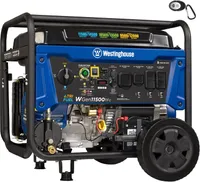
Portable generators are great for powering everything from small devices to appliances. And you won't have to fork over a ton of money or do extensive construction to accommodate them.
Go green, gain energy independence
Another way to keep the lights on is to harness the power of the sun. Solar panels, battery backups and generators generate electricity from the sun and convert it to AC electricity, which you can use to power items in your home when the lights are out.
Installing a solar energy system is the most permanent and most expensive solution. Energy Sage estimates the cost to install a system is $30,500, but there are state tax incentives that lower overall costs.

To demonstrate, New York offers homeowners up to 25% back of their total costs, up to $5,000, with the New York Solar Energy System Equipment Credit. Other states offering tax credits include Arizona, Colorado, Hawaii, Massachusetts, New Mexico and South Carolina.
Moreover, with solar panels, you gain energy independence, which means you don't have to rely on the grid as an energy source. However, if you want to keep the power on when an outage occurs, you'll need to have a battery backup, which stores the energy produced by your solar panels. Without a battery, the electricity could go back through the power lines, creating a dangerous situation for utility workers.
These can be expensive, costing on average around $15,000, according to Energy Sage. However, they do qualify for energy tax credits.
If you don't want to fork over tens of thousands of dollars, there are less expensive and more temporary measures available. Portable options and battery backups powered by solar can keep power available when you need.
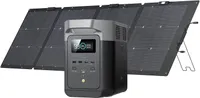
Prices depend on capabilities and what you want charged during an outage. If you don't encounter them often and just want a small system to have around in case, portable solar chargers are not bad options to consider.
Other gear for power outages
The Red Cross has a helpful list of items to include when preparing for an outage. Here's a look at some of the essentials:
- Coleman Chiller 48qt Insulated Portable Cooler with Ice Retention & Heavy-Duty Handles - $25.99
- Lepro LED Camping Lanterns Battery Powered - $16.99
- Esky Emergency Hand Crank Radio 7400mWh with 3 LED Flashlight, AM/FM/NOAA Portable Weather Radio with Power Bank Phone Charger - $15.59
- Johnson & Johnson All-Purpose Portable Compact First Aid Kit - $18.36
- Energizer Auto-On LED Flashlights Rechargeable for Home Power Failure - $10.49
- Portable Neck Fan, Hands Free Bladeless Fan, 360° Cooling Personal Fan - $25.61
- GearLight 2Pack LED Headlamp - $14.99
- Duracell Coppertop AA Batteries with Power Boost Ingredients, 24 Count Pack - $16.60
On the perishables end, have one gallon of water per person per day set aside. It's also ideal to have ample non-perishable food and at least a seven-day supply of any prescriptions you take.
All told, we're entering the season where power outages are a more frequent occurrence. Adopting some of these measures can help you remain comfortable and safe, when they happen.
Related content