‘Back to the Old Days’? What’s Wrong With Trump’s Plan to Abolish Income Tax
The likelihood of Trump eliminating income tax and the IRS remains low, but the ongoing debate highlights the need for tax reform.


You are now subscribed
Your newsletter sign-up was successful
Want to add more newsletters?

Delivered daily
Kiplinger Today
Profit and prosper with the best of Kiplinger's advice on investing, taxes, retirement, personal finance and much more delivered daily. Smart money moves start here.

Sent five days a week
Kiplinger A Step Ahead
Get practical help to make better financial decisions in your everyday life, from spending to savings on top deals.

Delivered daily
Kiplinger Closing Bell
Get today's biggest financial and investing headlines delivered to your inbox every day the U.S. stock market is open.

Sent twice a week
Kiplinger Adviser Intel
Financial pros across the country share best practices and fresh tactics to preserve and grow your wealth.

Delivered weekly
Kiplinger Tax Tips
Trim your federal and state tax bills with practical tax-planning and tax-cutting strategies.

Sent twice a week
Kiplinger Retirement Tips
Your twice-a-week guide to planning and enjoying a financially secure and richly rewarding retirement

Sent bimonthly.
Kiplinger Adviser Angle
Insights for advisers, wealth managers and other financial professionals.

Sent twice a week
Kiplinger Investing Weekly
Your twice-a-week roundup of promising stocks, funds, companies and industries you should consider, ones you should avoid, and why.

Sent weekly for six weeks
Kiplinger Invest for Retirement
Your step-by-step six-part series on how to invest for retirement, from devising a successful strategy to exactly which investments to choose.
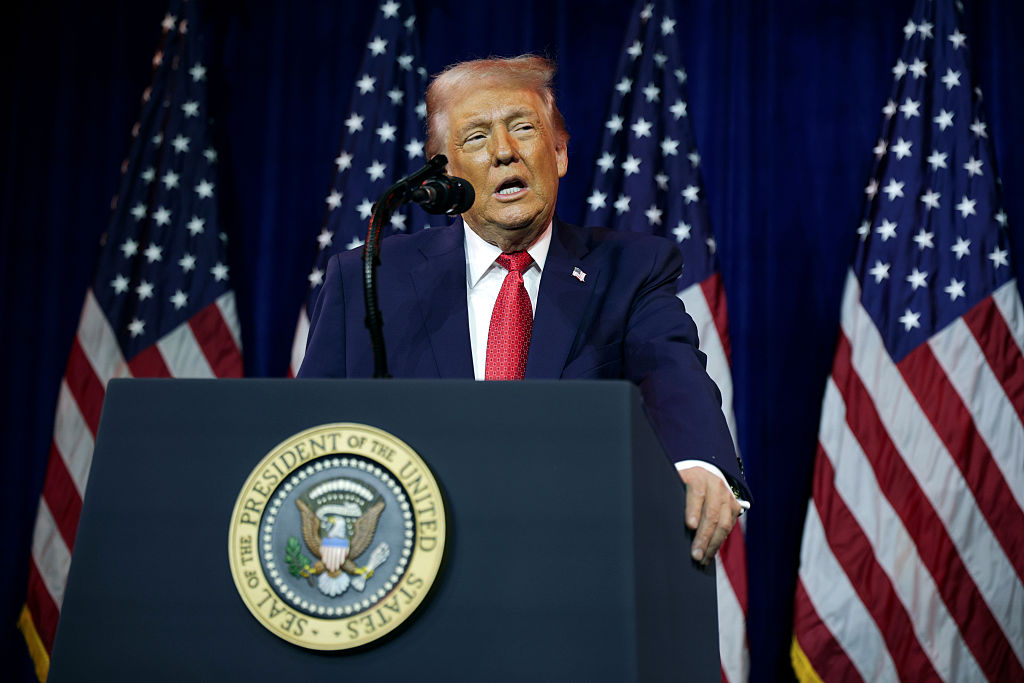
Donald Trump has once again stirred the debate on tax policy, recently advocating for eliminating income tax and returning to a tariff-based revenue system.
"We're going back to the old days. No income tax, just tariffs. It worked before, and it'll work again," Trump said earlier this year in Las Vegas, Nevada. He emphasized his point by adding, "The IRS is a disaster. We don't need it. Tariffs will fund everything we need and more."
The remarks, which came not long after a Republican lawmaker separately proposed abolishling the IRS and rewriting the tax code, reignited discussions about fundamental changes to the U.S. tax system. (It's worth noting that critics argue that heavy reliance on tariffs could lead to trade wars, increased consumer prices, and potential economic instability.)
From just $107.88 $24.99 for Kiplinger Personal Finance
Become a smarter, better informed investor. Subscribe from just $107.88 $24.99, plus get up to 4 Special Issues

Sign up for Kiplinger’s Free Newsletters
Profit and prosper with the best of expert advice on investing, taxes, retirement, personal finance and more - straight to your e-mail.
Profit and prosper with the best of expert advice - straight to your e-mail.
The idea of abolishing income tax isn't new, but Trump has thrust it into the spotlight, just as the U.S. faces the expiration of the Tax Cuts and Jobs Act (TCJA, aka “Trump tax cuts”) at the end of this year. (His sweeping tariffs on almost all goods from more than 100 countries went into effect April 9.)
This also comes as the Trump administration has unleashed a flurry of executive orders that significantly impact the functioning of federal agencies, including the IRS. And Trump's Department of Government Efficiency, led by Elon Musk of Tesla and SpaceX, has made sweeping workforce cuts across the federal government.
So, what does all of this mean for you? Here’s more to know.
Tariffs over income tax?
The concept of relying primarily on tariffs for federal revenue dates back to the early days of the United States (more than 150 years ago), when customs duties were the government's primary source of income. (The U.S. income tax was implemented in 1913.)
Trump argues that eliminating income tax would simplify the tax code, reduce taxpayers' burdens, and stimulate economic growth. He contends that a tariff-based system would protect American industries and create a more level playing field in international trade.
To that end, Trump has, as of April 9, levied sweeping tariffs on almost all countries, which his former Vice President Mike Pence has called "the largest peacetime tax hike in U.S. history."
However, the feasibility of a tariff-only revenue system in today's economy is questionable. Some economists warn that transitioning to such a system would be incredibly disruptive.
- The federal government relies heavily on income tax revenue, and replacing it entirely with tariffs would require a massive overhaul of the U.S. fiscal structure.
- Massive tariff hikes could potentially violate international trade agreements and spark retaliatory measures from trading partners.
- And let’s not forget: U.S. consumers will bear the brunt of tariffs through increased costs on numerous products.
Note: As of April 9, Trump levied sweeping baseline and some higher tariffs against almost all countries and a 104% tariff on China.
For more information, see Kiplinger's report: What's Happening With Trump Tariffs?
Interestingly, Trump's comments align with recent legislative proposals, like the Fair Tax Act reintroduced by Rep. Buddy Carter (R-GA).
As Kiplinger has reported, that bill proposes replacing the current tax code with a national consumption tax and eliminating the IRS.
What about abolishing the IRS tax agency?
Regarding getting rid of the IRS, Rep. Carter has stated, "The Fair Tax is exactly that – fair. It is the only tax proposal out there that is pro-growth, simple, and allows Americans to keep every cent of their hard-earned money while eliminating the need for the IRS altogether."
While not identical to Trump's tariff-focused plan, the Fair Tax Act also proposes eliminating income tax. Some Republican representatives support the Fair Tax Act, arguing it would simplify tax administration and allow U.S. taxpayers to keep more of their earnings.
- Critics of the Fair Tax Act and similar proposals warn that a consumption-based tax system could disproportionately burden lower-income households and potentially widen wealth inequality.
- They argue that such a system might be regressive since families with lower incomes typically spend more on consumable goods.
Meanwhile, Trump has floated the idea of a second tax agency, the so-called "ERS or External Revenue Service," that he says would handle tariff revenue.
The debate over these radical tax proposals is set against impending tax changes. With key provisions of the TCJA set to expire at the end of 2025, lawmakers face increasing pressure to address the future of U.S. tax policy.
And if that weren’t enough, a flurry of Trump executive orders are throwing a wrench into the mix.
Trump, DOGE cut IRS workforce amid hiring freeze
For example, in January, the White House Office of Management and Budget (OMB) issued a memo requiring all federal grants and loans that would have been effective January 28, 2025, to be frozen. While not directly targeting taxes, that unexpected and sweeping move would have significantly affected the tax landscape and many programs and activities that rely on federal aid.
However, just before the freeze on government grants and loans was to take effect, a federal judge paused its implementation until February 3. And, not long after, the Trump administration rescinded the OMB memo.
Still, the memo came in addition to executive orders already issued freezing federal hiring for 90 days (indefinitely for the IRS), requiring many federal workers to return to the office, and changing processes for reclassifying federal workers.
Key points of the now rescinded memo:
- Would halt distribution of federal financial assistance
- Would exclude Social Security, Medicare, and Medicaid benefits
- Federal agencies would have to report on affected programs by February 10, 2025
Note: This is a developing situation, so the key aspects of the memo are now impacted by legal orders.
Potential tax impacts of such a freeze:
- IRS Operations: A hiring freeze at the IRS could slow tax return processing and impact customer service.
- Tax Credits: Uncertainty around grant-supported tax credit programs, especially in clean energy and electric vehicles.
- Tax Guidance: Possible delays in issuing guidance on recent tax law changes.
- Program Changes: Tax-related federal programs could be affected, potentially altering available incentives and credits.
Notably, the memo didn't specify an end date for this "temporary" pause, which added another layer of uncertainty.
Trump income tax bottom line
While Trump's vision of a tariff-based system and similar ideas like the Fair Tax Act proposal may seem attractive to some, implementing such drastic changes (which require congressional approval) would be complex and challenging, to say the least.
But stay informed and engaged as tax discussions unfold. The decisions Congress and the White House make in the coming days, and months will have far-reaching implications for individual taxpayers, businesses, and the economy.
More on Trump's Tax Plan
- The Fine Print: What Trump Isn’t Telling You About His 2025 Tax Plans
- These States Would Be Hardest Hit By Trump Tariffs
- GOP Bill Proposes to Abolish the IRS and Rewrite the Tax Code

-
 10 Cheapest Places to Live in Colorado
Property Tax Looking for a cozy cabin near the slopes? These Colorado counties combine reasonable house prices with the state's lowest property tax bills.
-
 Look Out for These Gold Bar Scams as Prices Surge
Fraudsters impersonating government agents are convincing victims to convert savings into gold — and handing it over in courier scams costing Americans millions.
-
 How to Turn Your 401(k) Into A Real Estate Empire
Tapping your 401(k) to purchase investment properties is risky, but it could deliver valuable rental income in your golden years.


-
 Trump $10B IRS Lawsuit Hits an Already Chaotic 2026 Tax Season
Tax Law A new Trump lawsuit and warnings from a tax-industry watchdog point to an IRS under strain, just as millions of taxpayers begin filing their 2025 returns.
-
 The New Fed Chair Was Announced: What You Need to Know
President Donald Trump announced Kevin Warsh as his selection for the next chair of the Federal Reserve, who will replace Jerome Powell.
-
 Trump Reshapes Foreign Policy
The Kiplinger Letter The President starts the new year by putting allies and adversaries on notice.
-
 Congress Set for Busy Winter
The Kiplinger Letter The Letter editors review the bills Congress will decide on this year. The government funding bill is paramount, but other issues vie for lawmakers’ attention.
-
 The December CPI Report Is Out. Here's What It Means for the Fed's Next Move
The December CPI report came in lighter than expected, but housing costs remain an overhang.
-
 The Kiplinger Letter's 10 Forecasts for 2026
The Kiplinger Letter Here are some of the biggest events and trends in economics, politics and tech that will shape the new year.
-
 Special Report: The Future of American Politics
The Kiplinger Letter The Political Trends and Challenges that Will Define the Next Decade
-
 The November CPI Report Is Out. Here's What It Means for Rising Prices
The November CPI report came in lighter than expected, but the delayed data give an incomplete picture of inflation, say economists.


